Disclosure: As an Amazon Associate, we earn from qualifying purchases made through links in this guide at no additional cost to you. These commissions help fund our independent gear research.
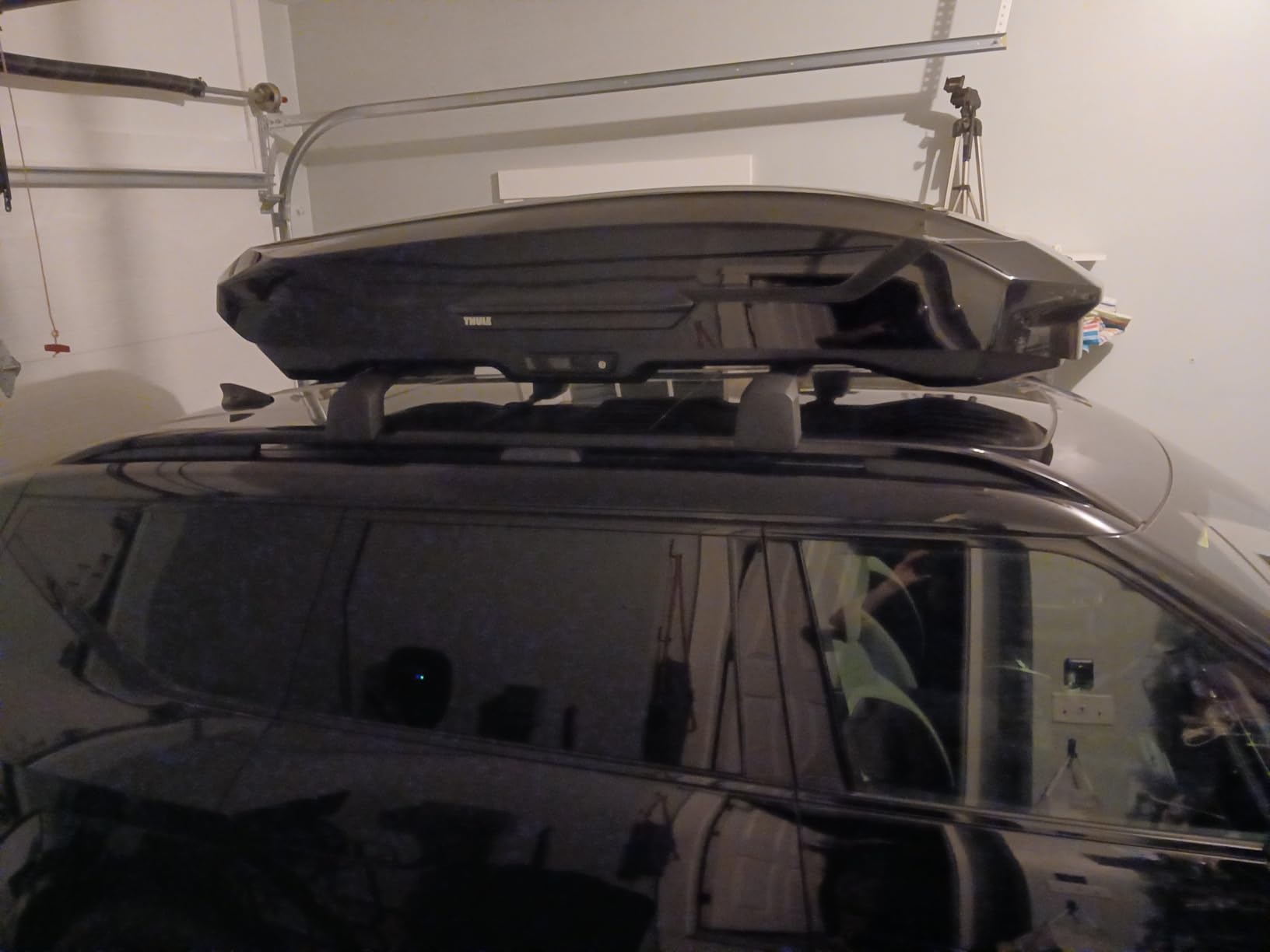
The hard shell vs soft rooftop cargo carrier question is the first real decision every roof storage buyer faces. Skip past it and you risk spending $800 on a hard-shell box you only use once a year, or $130 on a soft bag that can’t handle the gear you actually need to carry. The two formats look superficially similar — both mount on the roof, both add cargo space, both claim to be waterproof — but they solve fundamentally different problems for fundamentally different buyers.
This guide breaks the decision down properly. We compare both formats across the eight factors that actually matter — capacity, price, weatherproofing, security, installation, storage when not in use, fuel economy, and longevity — and tell you exactly which type fits your specific situation. By the end, you should know within a few minutes whether a hard-shell box like the [Thule Motion 3 XL] or a soft bag like the MeeFar 21 Cu Ft is the right answer for you.
Short version: hard-shell wins on durability, security, and refined daily use. Soft bags win on price, flexibility, and storing the carrier when you’re not driving. The wrong choice is buying based on price alone — both formats can disappoint when matched poorly to use case.
Quick Decision Matrix: Hard Shell vs Soft Rooftop Cargo Carrier
| Your Situation | Best Format | Recommended Pick |
|---|---|---|
| Use the carrier 4+ times per year | Hard Shell | Yakima SkyBox NX 18 |
| Use the carrier 1-3 times per year | Either | Hard shell if you have crossbars; soft if not |
| Use the carrier less than once a year | Soft Bag | MeeFar 21 Cu Ft |
| No roof rack on your vehicle | Soft Bag | MeeFar 21 Cu Ft (door-hook mount) |
| Carry skis or golf clubs | Hard Shell | Thule Motion 3 XL |
| Need to lock valuable gear | Hard Shell | Yakima SkyBox NX 18 (SKS lock) |
| Limited home storage space | Soft Bag | Folds flat when empty |
| Want maximum waterproofing | Hard Shell (premium) | Thule Motion 3 XL |
| Tightest budget | Soft Bag | MeeFar 21 Cu Ft |
What Each Format Actually Is
Before comparing them, it helps to be precise about what each carrier type actually is — because marketing copy blurs the categories more than it should.
Hard Shell Roof Cargo Box
A hard-shell roof cargo box is a rigid plastic enclosure — typically ABS or HDPE plastic — that mounts to crossbars on your vehicle’s roof. The shell maintains its shape regardless of contents, the lid latches and locks, and the box sits as a permanent-looking accessory on your vehicle until you remove it. Common examples include the [Thule Motion 3 XL], Yakima SkyBox NX 18, and [SportRack Vista XL].
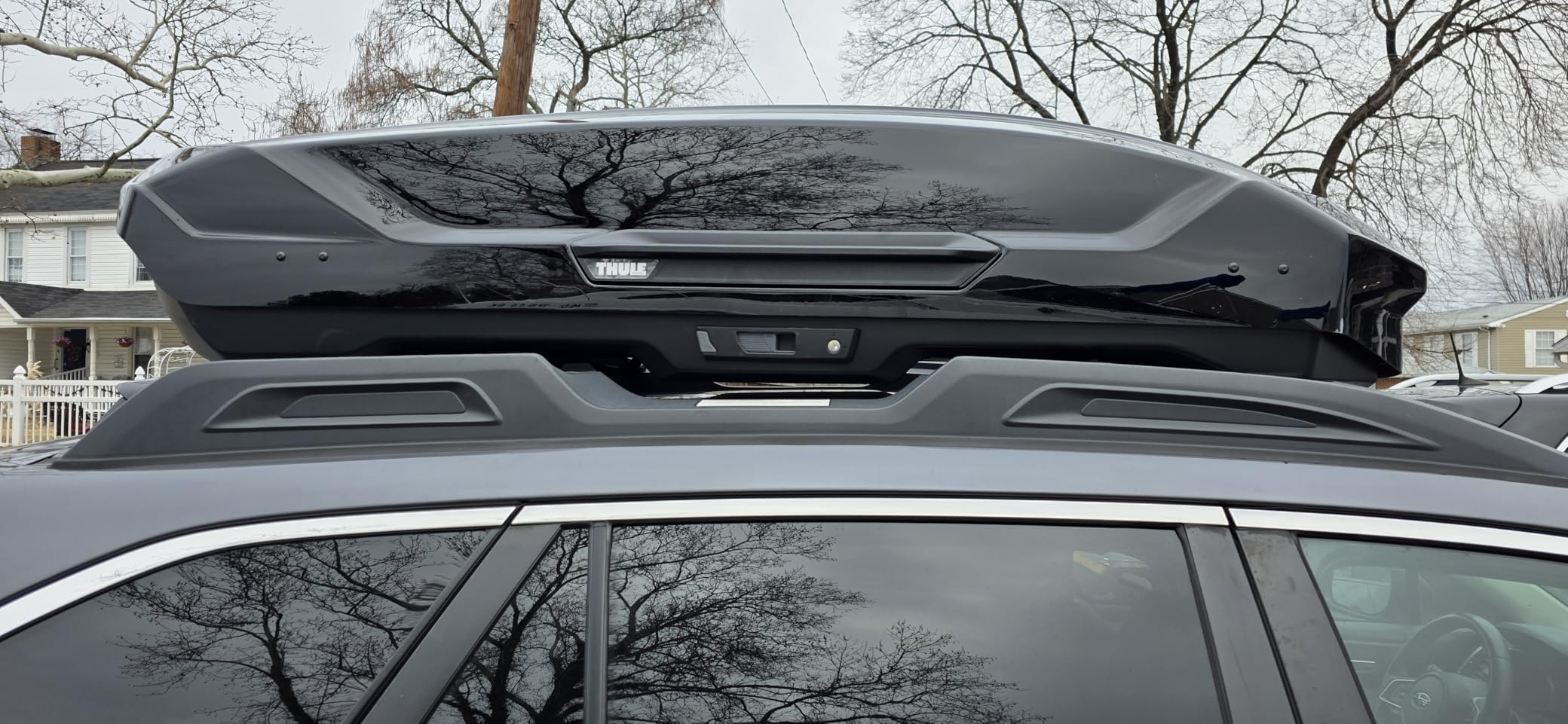
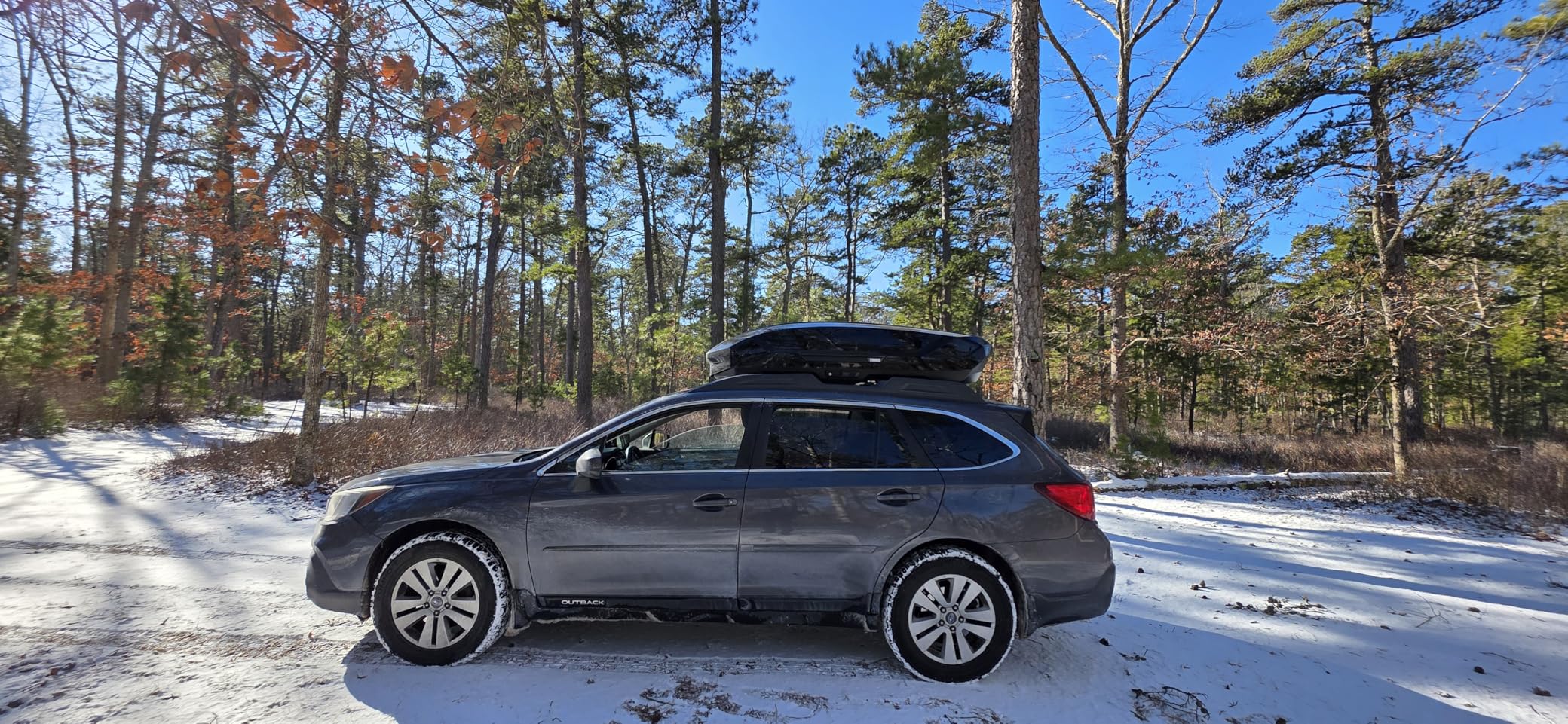
Hard-shell boxes typically range from 11 to 21 cubic feet of capacity, weigh 30 to 60 pounds empty, and require crossbars to mount. Prices run from around $250 for budget options up to $1,250+ for premium ski-and-golf-capable models. They are designed to live on the vehicle across an entire travel season — install once, use repeatedly, remove at the end of the season.
Soft Rooftop Cargo Carrier (Soft Bag)
A soft rooftop cargo carrier is a fabric bag — typically heavy-denier oxford cloth or coated PVC — that mounts to the roof using straps, and either rests on crossbars or attaches directly to a “naked” roof using door hooks. The bag conforms to the shape of its contents, packs flat when empty, and is removed between trips rather than left on the vehicle.
Soft bags typically range from 10 to 21 cubic feet of capacity, weigh 5 to 10 pounds empty, and can be installed on a wider range of vehicles — including those without roof racks. Prices run from around $80 for basic models up to $250+ for premium heavy-duty fabric versions. They are designed for occasional use — install for the trip, remove after, store compactly until next time.
Round 1: Capacity and Internal Volume
Both formats deliver roughly comparable cubic-foot capacity at the upper end of their respective product ranges. Premium hard-shells like the Yakima SkyBox NX 18 offer 18 cubic feet; premium soft bags like the MeeFar offer 21 cubic feet. On paper, the soft bag wins.
In practice, the comparison is more nuanced.
Hard Shell Capacity Reality
Hard-shell capacity numbers are honest. An 18 cubic foot box gives you 18 cubic feet of usable interior, give or take a small amount lost to internal mounting hardware. The flat floor (in the Yakima NX 18’s case, completely flat with no center hump) means luggage stacks predictably. A box that fits a paddleboard, three river tubes, three carry-on suitcases, and assorted soft gear in one verified buyer’s road trip really did fit all of that.
Soft Bag Capacity Reality
Soft bag capacity numbers are aspirational. A “21 cubic feet” soft bag does fit 21 cubic feet of contents, but only if you stuff the bag completely full and the gear is soft enough to compress and conform to the shape. For rigid items like coolers, hard-sided suitcases, or boxed equipment, the effective capacity drops significantly because the rigid items can’t expand the bag the way soft gear can.
What This Means
If you’re hauling soft luggage (duffels, sleeping bags, jackets, pillows, camping clothes), a 21 cu ft soft bag and an 18 cu ft hard shell hold roughly equivalent amounts. If you’re hauling hard-sided suitcases or rigid gear, the hard shell’s true 18 cubic feet beats the soft bag’s optimistic 21.
Edge: Tie for soft cargo, hard shell wins for rigid gear.
Round 2: Price
This is where soft bags consistently win, and by a meaningful margin.
| Tier | Hard Shell Price Range | Soft Bag Price Range |
|---|---|---|
| Budget | $250-$400 (e.g. SportRack Vista XL) | $80-$130 (e.g. basic models) |
| Premium | $700-$1,250 (Yakima, Thule) | $150-$250 (MeeFar, Asinking, Mockins) |
A premium soft bag costs roughly the same as a budget hard shell. A premium hard shell costs four to five times as much as a premium soft bag. For buyers who only need rooftop storage occasionally, the price gap is the single biggest factor pushing them toward soft.
That said, price-per-trip math changes the picture for frequent users. A $1,000 hard shell used 5 times per year over 8 years costs $25 per trip. A $130 soft bag used 2 times per year over 4 years (typical lifespan with regular use) costs $16 per trip. The hard shell is more expensive per trip, but not by as much as the sticker price suggests — and the per-trip experience is meaningfully better.
Edge: Soft bag wins on initial price; hard shell narrows the gap on per-trip cost over a long ownership.
Round 3: Waterproofing and Weather Resistance
This is the round where format matters less than engineering quality within each format. A premium soft bag with proper construction outperforms a budget hard shell with worn seals. A premium hard shell with engineered closure systems outperforms a budget soft bag with stitched (not heat-welded) seams.
Premium Hard Shell Waterproofing
The [Thule Motion 3 XL] and Yakima SkyBox NX 18 both perform very well in heavy rain. Verified buyer feedback documents the Yakima keeping contents dry through full first-trip rain on day one. The SlideLock system on the Thule maintains even closure pressure across the perimeter seal, which is what keeps water out trip after trip.
Premium Soft Bag Waterproofing
The MeeFar, Asinking, and Mockins all use coated PVC or heavy-denier oxford fabrics with covered zipper flaps. The coated PVC bonds the waterproof layer to the fabric rather than treating it as a surface spray, and the zipper flap prevents wind-driven rain from forcing into the closure. These bags genuinely keep gear dry under highway-speed rain.
Where Each Format Fails
Hard shells fail when the lid seal degrades over years of use, or when budget designs use U-bolt mounting hardware that creates penetration points in the shell floor (like the SportRack Vista XL — strong rain resistance, but the bolt-hole plug stickers are a long-term wear point).
Soft bags fail when seams are stitched rather than heat-welded (needle holes leak under pressure), when the zipper flap is too narrow to fully cover the closure, or when the fabric coating wears through after extended UV exposure.
For a deeper format-by-format waterproofing breakdown including seal engineering, fabric denier ratings, and zipper construction, see our Waterproof Rooftop Cargo Carrier guide.
Edge: Premium hard shell wins for absolute weatherproofing; premium soft bag is closer than you’d think.
Round 4: Security and Theft Protection
This is where hard shells win cleanly, and it’s not particularly close.
Hard Shell Security
A premium hard-shell roof box is a meaningful theft deterrent. The Thule SlideLock system automatically engages the lock when the lid closes; the Yakima SKS (Same Key System) locks the box to the vehicle and the contents inside the box. The full metal opening handle on the Yakima provides physical resistance to forced entry. Neither is a safe — a determined thief with tools can defeat any consumer roof box — but both eliminate casual opportunistic theft.
For ski resort parking lots, trailheads, hotel parking, and overnight rest stops, hard-shell security is a real benefit. Skis costing $1,500-$3,000, golf clubs costing $2,000+, and luggage left in transit overnight all benefit from the locking enclosure.
Soft Bag Security
Soft bags rely on lockable zippers at best. A locked zipper means someone has to cut the bag to access contents — which is enough to deter casual theft from a parking lot, but not a determined attempt. More fundamentally, the entire bag can be removed from the roof in a few minutes by anyone willing to undo the straps.
For low-value cargo (clothes, sleeping bags, camping gear), soft-bag security is adequate. For high-value gear, it isn’t.
Edge: Hard shell wins decisively. Soft bags are not security solutions.
Round 5: Installation and Vehicle Compatibility
Here’s where soft bags reclaim ground. Soft bags fit a much wider range of vehicles than hard shells, with significantly less infrastructure required.
Hard Shell Installation Requirements
Hard-shell boxes require crossbars. Not just roof rails — the raised side bars running front-to-back on many vehicles — but crossbars, the perpendicular bars spanning left to right. Many SUVs and crossovers come with rails but no crossbars. Adding aftermarket crossbars typically costs $400-$680 plus install labor.
The hard-shell box itself weighs 30 to 60 pounds. Lifting that weight onto a tall SUV roof solo is awkward at best, dangerous at worst. Two-person installation is strongly recommended for most premium hard shells.
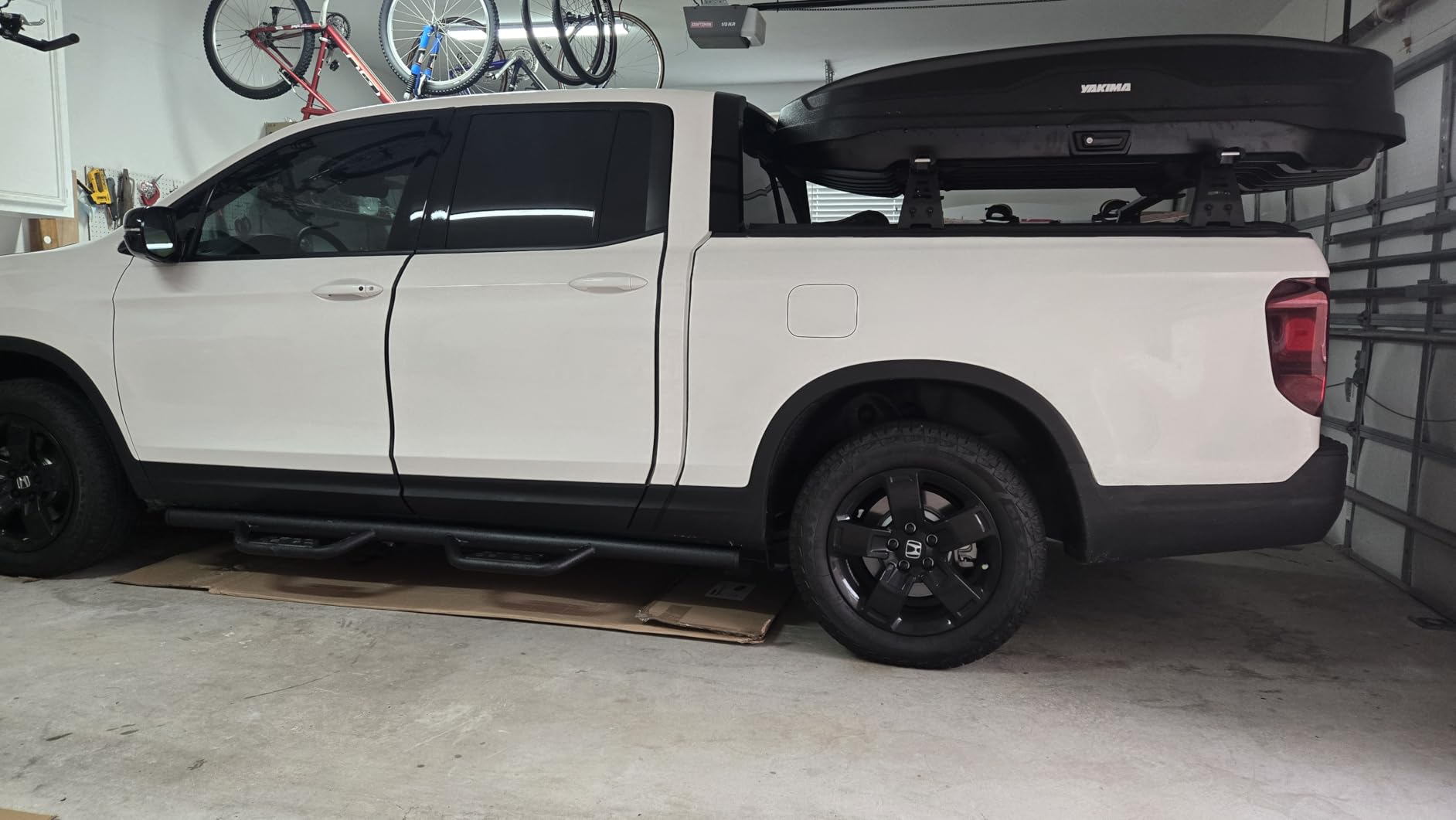
Once the crossbars are in place and the box is mounted, premium hard shells (Thule PowerClick, Yakima torque knob) install relatively quickly — typically 10-15 minutes for a confident user.
Soft Bag Installation Reality
Soft bags can mount on:
- Vehicles with crossbars (use the crossbars as anchor points)
- Vehicles with raised roof rails only (loop straps around the rails)
- Vehicles with no roof rack at all (use door hooks anchored to the door frames)
The MeeFar 21 Cu Ft and similar premium soft bags include 6 door hooks specifically for the no-rack scenario. The door-hook system anchors to the metal frame inside the door opening, not the door itself, so the doors close normally afterward.
Installation is typically one-person friendly: you lay the bag on the roof empty, route the straps, anchor them, then load the bag. Total time is similar to a hard shell (10-20 minutes) but with much less weight to lift.
The Critical Door-Hook vs Internal-Strap Distinction
One important warning: never mount a soft cargo bag using straps that run through the inside of the cabin (over the headliner, with doors closing on the strap material). This forces you to leave doors slightly ajar, allowing rain into the cabin, and may interfere with side-curtain airbag deployment. Always use proper door hooks designed for external door-frame anchoring.
Edge: Soft bag wins on vehicle compatibility flexibility and ease of single-person install.
Round 6: Storage When Not in Use
This is the round most first-time buyers underestimate, and it has real implications for ownership satisfaction.
Hard Shell Storage Problem
An 84-inch hard-shell roof box is a large, awkward object. It’s roughly 7 feet long, 3 feet wide, and 1.5 feet tall. When you remove it from the vehicle, it has to live somewhere — and “somewhere” is typically:
- Hanging from garage ceiling pulleys (requires installation, $50-$150 in hardware)
- Standing against a garage wall (consumes 7+ feet of wall space)
- Inside the basement or shed (consumes substantial floor area)
- Outdoors under a tarp (degrades the shell over time)
For homeowners with three-car garages, this isn’t an issue. For apartment dwellers, condo owners, or anyone with a single-car garage already crowded by other things, it’s a real problem.
Soft Bag Storage Advantage
Soft bags fold flat when empty. A 21 cubic foot bag that holds your entire family’s road-trip gear collapses down to roughly the size of a duffle bag for storage. It can live on a closet shelf, in a basement bin, or under a bed. The MeeFar specifically includes a compact storage bag for off-season housing.
For buyers without dedicated garage space, this single factor often decides the format choice — and correctly so. A hard shell that lives on the curb or under an outdoor tarp will degrade much faster than the same hard shell stored properly.
Edge: Soft bag wins decisively. This is often the deciding factor for urban buyers.
Round 7: Aerodynamics, Wind Noise, and Fuel Economy
Both formats reduce fuel economy. The premium hard-shell wing-shaped designs minimize the loss; the budget boxy designs and most soft bags lose more.
Hard Shell Aerodynamics
Premium hard shells (Thule Motion 3 XL with its forward-leaning wing profile, Yakima SkyBox NX 18 with its low 16.5-inch height) are engineered for aerodynamic efficiency. Verified buyers describe both as “surprisingly quiet” at highway speeds on large SUVs. Expect a 1-3 mpg fuel economy reduction depending on vehicle and speed.
Budget hard shells (SportRack Vista XL with its 19-inch height) sit taller and create more drag. Fuel economy loss is more noticeable, and wind noise increases.
Soft Bag Aerodynamics
Soft bags are typically less aerodynamic than hard shells because:
- The fabric flexes and deforms at highway speeds, creating turbulence
- The shape changes based on contents (a half-empty bag is less aerodynamic than a fully packed one)
- Most soft bags are taller and boxier than premium hard shells
Forum reports from minivan and SUV owners running soft bags consistently document 2.5-4 mpg reductions on long highway trips — somewhat worse than premium hard shells.
For EV owners, this difference matters more. The Thule Motion 3 XL’s wing-shaped profile minimizes range loss in ways that no current soft bag can match.
Edge: Premium hard shell wins meaningfully; soft bags fight more drag at highway speeds.
Round 8: Longevity and Ownership Lifespan
Hard shells outlast soft bags by a significant margin. This is intuitive — UV-resistant ABS plastic resists weather, sun, and abrasion better than coated fabric — but the magnitude is worth understanding.
Hard Shell Lifespan
A premium hard shell from Thule or Yakima, used regularly and stored properly, should last 10-15+ years. Mounting hardware may need replacement parts after 5-8 years of seasonal install/remove cycles. The shell itself rarely fails first; the gasket seals and latches are the typical wear points.
Soft Bag Lifespan
A premium soft bag from MeeFar, Asinking, or Mockins, used regularly and stored properly, should last 5-8 years. The waterproof coating on the fabric is the typical wear point, particularly along strap reinforcement areas where stress concentrates. Heat-welded seams hold up indefinitely; stitched seams (on cheaper bags) degrade faster.
UV exposure accelerates soft-bag degradation more than hard-shell degradation. A soft bag stored in direct sun between trips will fail years sooner than one stored in a closet.
Cost-Per-Year Math
A $1,000 premium hard shell over 12 years is $83 per year. A $200 premium soft bag over 6 years is $33 per year. The soft bag wins on cost-per-year, but the hard shell delivers a meaningfully better ownership experience for that higher annual cost.
Edge: Hard shell wins on longevity; soft bag wins on cost-per-year.
When to Choose Hard Shell
Choose a hard-shell roof cargo box if any of the following apply:
- You use the carrier 4+ times per year. The premium daily-use experience justifies the price for frequent users.
- You carry skis or snowboards over 165 cm. Hard shells from Thule and Yakima accommodate skis up to 200 cm; most soft bags cannot match this length safely. See our Best Roof Box for Skis guide.
- You carry golf clubs. A 48-inch driver and full-length golf bag fit predictably in a long hard-shell box. See our Best Roof Cargo Box for Golf Clubs guide.
- You need to lock valuable gear. Hard-shell locking is meaningfully more secure than zipper locks.
- You drive a premium SUV and care about appearance. Wing-shaped hard shells integrate visually with modern SUV silhouettes. See our Best Roof Cargo Box for SUV guide.
- You already have crossbars installed. No need to factor in $400-$680 of additional rack purchase.
- You have garage or storage space for the box when off the vehicle.
- Fuel economy matters to you on long highway trips.
The right hard-shell pick depends on use case. For most buyers, the Yakima SkyBox NX 18 is the best balance. For premium daily-use refinement, upgrade to the Thule Motion 3 XL. For budget-conscious occasional use, the SportRack Vista XL covers the basics.
When to Choose Soft Bag
Choose a soft rooftop cargo carrier if any of the following apply:
- You use the carrier 1-2 times per year or less. The price gap doesn’t justify hard-shell spending for occasional use.
- Your vehicle has no crossbars and you don’t want to install them. Door-hook mounting on a “naked” roof works.
- You don’t have storage space for an 84-inch box when it’s off the vehicle. Soft bags fold flat.
- Budget is the primary constraint. Premium soft bags deliver 70% of the hard-shell experience at 20% of the price.
- You’re hauling soft, low-value gear. Clothes, bedding, beach equipment, sleeping bags — all ideal for soft-bag transport.
- You drive multiple vehicles. Soft bags transfer between vehicles much faster than hard shells.
- You’re trying rooftop storage for the first time. Lower commitment lets you confirm whether you’ll use rooftop storage enough to upgrade later.
For most soft-bag buyers, the MeeFar 21 Cu Ft offers the best complete-kit value (anti-slip mat + 6 door hooks + 10 internal straps included). For maximum durability with heavier 840D fabric, upgrade to the Asinking. For abrasion-resistant vinyl construction, consider the Mockins. See our Best Soft Rooftop Cargo Carrier guide for the full breakdown.
Buyer Profile Recommendations
Rather than declaring one universal winner, here are clear recommendations by buyer profile.
”I have a small family and take 2-3 road trips a year”
Recommendation: Premium soft bag. The MeeFar 21 Cu Ft delivers ample capacity, weatherproofing, and door-hook flexibility for $130. If your annual rooftop storage need is two summer trips and one Thanksgiving haul, a soft bag is the smart spend.
”I ski every weekend in winter and camp every weekend in summer”
Recommendation: Premium hard shell. You’re a frequent user. The [Thule Motion 3 XL]or Yakima SkyBox NX 18 pays back the price difference in daily-use refinement and durability. See our Thule vs Yakima head-to-head comparison.
”I drive a premium SUV and want the box to look good”
Recommendation: Premium hard shell. Wing-shaped designs (Thule Motion 3 XL) integrate visually; soft bags do not. Aesthetics matter on a vehicle you care about.
”I live in an apartment and have nowhere to store a hard box”
Recommendation: Premium soft bag. Storage is the deciding factor. A folded MeeFar lives on a closet shelf; an 84-inch hard shell does not.
”I have an EV and care about range loss”
Recommendation: Premium hard shell with low-profile design. The Thule Motion 3 XL’s wing-shaped profile minimizes drag. Soft bags hurt range more.
”I’m hauling expensive skis or golf clubs to remote trailheads”
Recommendation: Premium hard shell with secure locking. Yakima SKS or Thule SlideLock provides meaningful theft deterrence. Soft bags don’t.
”I’m not sure if I’ll use rooftop storage enough to justify a hard box”
Recommendation: Start with a soft bag. Try one season. If you find yourself using it 4+ times per year, upgrade to a hard shell next season. Trade the soft bag to a friend or sell it — you’ll lose minimal value.
Frequently Asked Questions
Are hard-shell roof cargo boxes really worth the price?
For frequent users (4+ trips per year), yes. The premium daily-use refinements — refined mounting hardware, dual-sided opening, secure locking, durable construction — pay back the price difference over years of ownership. For occasional users (1-2 trips per year), no. A premium soft bag delivers most of the practical benefit at a fraction of the cost.
Can a soft cargo bag really keep my gear dry in heavy rain?
Premium soft bags from MeeFar, Asinking, and Mockins use coated PVC or heavy-denier oxford fabrics with covered zipper flaps. They genuinely handle highway-speed rain without leaking. Cheap soft bags with stitched seams and unprotected zippers do not. For absolute waterproofing in the most demanding conditions, premium hard shells from Thule and Yakima outperform soft bags. See our Waterproof Rooftop Cargo Carrier guide for engineering details.
Do I really need crossbars for a hard-shell roof box?
Yes. Hard-shell boxes require crossbars — the perpendicular bars spanning the roof left to right. Raised side rails alone are not sufficient. If your vehicle has rails but no crossbars, you have two options: install aftermarket crossbars ($400-$680 typical including labor), or use a soft cargo bag with door-hook mounting that doesn’t require a roof rack.
Which format is more aerodynamic?
Premium hard shells with wing-shaped designs (Thule Motion 3 XL) are most aerodynamic. Premium soft bags fall in the middle. Budget hard shells with tall boxy profiles (SportRack Vista XL at 19 inches tall) and budget soft bags are least aerodynamic. Expect 1-3 mpg fuel economy loss with premium hard shells; 2.5-4 mpg with most soft bags and budget boxes.
Can I leave a soft cargo bag on my car when not in use?
You can, but you shouldn’t. Continuous UV exposure accelerates fabric coating degradation, and constant outdoor exposure shortens the bag’s lifespan from 5-8 years down to 2-3 years. The advantage of soft bags is that they fold flat — use that advantage by storing them indoors between trips.
Which is harder to install?
Premium hard shells are heavier (30-60 lbs) and benefit from two-person installation. Soft bags are lighter (5-10 lbs) and easier to install solo. However, both formats require similar total time (10-20 minutes) once you’re familiar with the process. The first install of either format takes longer.
Is one safer than the other for highway driving?
Both formats are safe at highway speeds when properly installed and within the vehicle’s roof load rating. Hard shells are more rigid and don’t deform in wind; soft bags can flap or shift if straps are improperly tightened. Following manufacturer instructions and respecting weight limits is more important than format choice for safety.
Can I use a hard shell on multiple vehicles?
Yes, if both vehicles have compatible crossbars. Both Thule and Yakima boxes are designed to transfer between vehicles. The mounting hardware adjusts for different crossbar spreads (Yakima specifies 24-40 inches for the SkyBox NX 18). Soft bags are even more vehicle-flexible because door-hook mounting works across nearly any vehicle.
Which is better for EVs?
Premium aerodynamic hard shells (Thule Motion 3 XL specifically) minimize range loss better than any current soft bag. The wing-shaped profile and low height reduce drag substantially. For EV owners who plan to use the box frequently, the range-loss difference can offset the price difference over years of charging cost savings.
What about hitch-mounted cargo boxes — should I consider those instead?
Hitch boxes are a third option worth considering for buyers who: dislike lifting gear overhead, drive vehicles with low garage clearance, want minimal fuel economy impact, or have hitches but no roof rack. The trade-off is they block rear hatch access and require an existing hitch receiver. For most family travel scenarios, roof storage (hard or soft) remains more practical, but hitch boxes deserve consideration for specific use cases.
Final Verdict: Hard Shell vs Soft Rooftop Cargo Carrier
The cleanest summary we can give:
Hard-shell roof cargo boxes win for frequent users, ski and golf hauling, security-sensitive cargo, premium SUV aesthetics, and long-term cost-per-trip value. If you use rooftop storage four or more times per year, drive a premium vehicle, or carry valuable gear, the price premium of a Thule Motion 3 XL or Yakima SkyBox NX 18 pays back across years of refined daily use.
Soft rooftop cargo carriers win for occasional users, vehicles without crossbars, buyers without garage storage, and tighter budgets. If you take one or two trips per year, drive a vehicle without a roof rack, live in an apartment, or are simply trying rooftop storage for the first time, a MeeFar 21 Cu Ft delivers most of the benefit at a fraction of the cost.
The wrong choice is buying based on price alone (and ending up with a hard shell you don’t use enough) or buying based on capacity numbers alone (and ending up with a soft bag that fails on durability or security for your actual use case). Match the format to how you actually drive, what you actually carry, and where you actually store the carrier between trips.
For a complete overview of the rooftop cargo box category — including specific picks, vehicle compatibility, and use-case recommendations — start with our Best Roof Cargo Box 2026 main guide.
Continue Reading
- Best Roof Cargo Box 2026: The Complete Buying Guide — Hub guide covering all major categories.
- Yakima SkyBox NX 18 Full Review — Premium hard-shell deep dive.
- Thule Motion 3 XL vs Yakima SkyBox NX 18 — Premium hard-shell head-to-head.
- Best Soft Rooftop Cargo Carrier 2026 — Top soft-bag picks compared.
- Best Roof Cargo Box for SUV 2026 — SUV-specific format recommendations.
- Waterproof Rooftop Cargo Carrier 2026 — Rain performance across both formats.
- Best Roof Box for Skis 2026 — Length-first ski recommendations.
- Best Roof Cargo Box for Golf Clubs 2026 — Multi-bag golf travel.
Prices and availability are accurate as of publication. As an Amazon Associate, we earn from qualifying purchases made through links on this page. Affiliate commissions do not influence our rankings — every recommendation is based on engineering analysis, real-world testing, and verified buyer feedback.