Disclosure: As an Amazon Associate, we earn from qualifying purchases made through links in this guide at no additional cost to you. These commissions help fund our independent gear research.
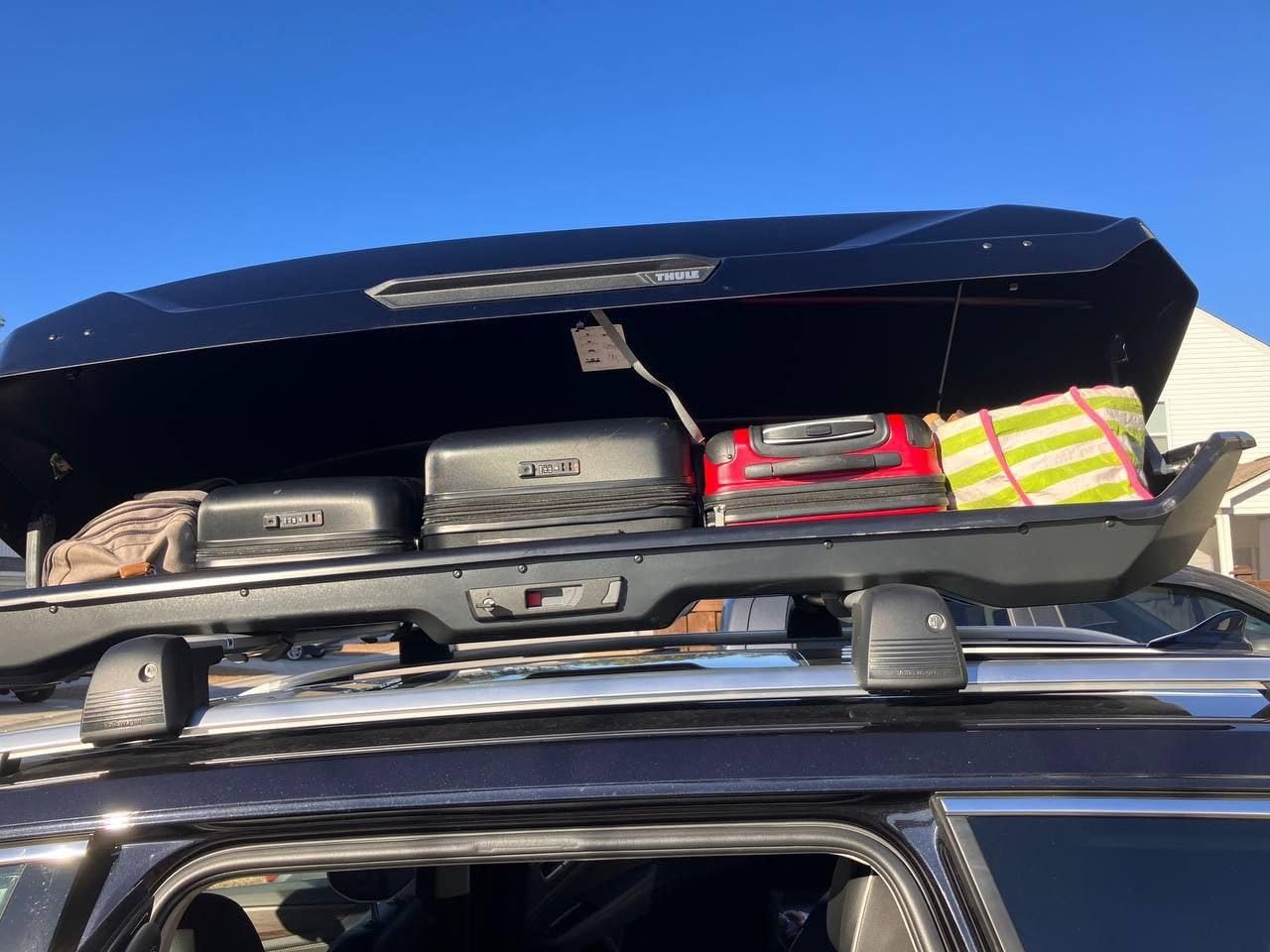
Tesla Model Y owners face a roof cargo box decision that gas-car owners do not. The Model Y has no factory crossbars from the dealer — you have to add them yourself, either through Tesla’s $99-$200 official accessory or aftermarket alternatives. The all-glass roof creates installation anxiety that does not exist on a steel-roof SUV. The 165-pound roof load rating is meaningfully lower than most mid-size SUVs. And the conversation about range loss matters in a way it never does for an internal-combustion vehicle.
Get any of those four factors wrong and you have a problem. Pick a box that’s too heavy and you blow past the roof load rating. Pick a box that’s too tall and aerodynamically inefficient and you lose 15-20% of your range on highway trips. Pick the wrong crossbars and you risk cracking the glass roof during installation — a verified concern documented across every Tesla owner forum.
This guide is built to navigate all four. We cover the right crossbar choice (Tesla OEM, Yakima, or Thule), the boxes that match Model Y’s load rating and aerodynamic priorities, the real range-loss expectations from owners who’ve measured it, and the installation precautions specific to glass-roof vehicles. By the end, you should know exactly which roof cargo box fits your Model Y — including the 2025-2026 Juniper refresh — and how to install it without damaging the most expensive part of the car.
Quick Verdict: Best Roof Cargo Box for Tesla Model Y
- 🏆 Best Overall for Model Y: Yakima SkyBox NX 18. Tesla’s factory crossbars are made by Yakima — the SkyBox NX 18 mounts cleanly with no compatibility friction. Low 16.5-inch profile minimizes range loss. 53 lb weight stays within Model Y’s 165 lb roof load rating with usable cargo capacity remaining.
- 🥈 Best Premium Pick: Thule Motion 3 XL. Wing-shaped aerodynamic profile delivers the lowest highway drag in the category — meaningful for EV range. 200 cm ski clearance and SlideLock security justify the premium for frequent Model Y travelers.
- 💰 Best Budget Pick: SportRack Vista XL. Shorter 63-inch length and rear-opening design reduce hatch-clearance risk on the Model Y’s curved liftgate. Lower price for occasional Tesla road trips.
- 🌧️ Best for No-Crossbar Option: MeeFar 21 Cu Ft. Door-hook mounting bypasses the crossbar question entirely — useful for Model Y owners who want occasional cargo storage without committing to permanent rack installation.
The Tesla Model Y Roof Cargo Box Problem: Five Things Gas-Car Buyers Don’t Worry About
Roof cargo box buying guides written for gas vehicles assume things that aren’t true for Tesla. Five issues are specific to Model Y owners and need to be understood before any product recommendation.
1. No Factory Crossbars Out of the Box
Most modern SUVs come with at least basic roof rails from the factory, even if crossbars are an upgrade. The Model Y ships with neither rails nor crossbars. The roof is completely smooth glass.
This means every Model Y roof cargo box buyer must first solve the crossbar problem. Three options exist:
- Tesla OEM Roof Rack ($350-$450 from Tesla, including installation): Made by Yakima for Tesla, designed specifically for the Model Y, includes a torque-limiting tool to prevent glass damage during install.
- Aftermarket Tesla-Specific Crossbars ($130-$250 on Amazon): Brands like Tesery, Tesloid, Zorik, EVbase, and AUXPACBO offer Tesla-specific crossbars. Most include glass-roof-safe torque tools and rubber pads.
- Universal Crossbars Adapted to Model Y: Thule and Yakima both offer crossbars that fit the Model Y’s mounting points with appropriate vehicle-specific kits. Higher cost than Tesla-specific aftermarket but better long-term ecosystem if you own multiple vehicles.
For most Model Y owners, the OEM rack from Tesla is the simplest and safest choice. The Yakima manufacturing origin means full compatibility with the Yakima SkyBox NX 18 cargo box.
2. The 165 lb Roof Load Rating
The Model Y’s roof load rating is 165 lbs total — including the crossbars themselves, the cargo box, and everything packed inside. This is meaningfully tighter than a Toyota Highlander (165 lbs typical) or Honda Pilot (165 lbs typical), and roughly the same as compact SUVs.
Working the math:
- Tesla OEM crossbars: ~10 lbs
- Yakima SkyBox NX 18: 53 lbs empty
- Remaining cargo capacity: ~102 lbs
That’s adequate for a family of four’s soft luggage on a road trip. It is not adequate for heavy gear like coolers full of ice, multiple bikes, or rooftop tents. Heavy items belong in the Model Y’s frunk and rear cargo area, not on the roof.
3. The Glass Roof Risk
Tesla owner forums document repeated reports of cracked glass roofs from improper crossbar installation. The risk is real but specific: it occurs when crossbar clamps are over-tightened past the glass roof’s tolerance, particularly when installers don’t use torque-limiting tools or improvised wrenches.
The mitigation is straightforward:
- Use a torque-limiting tool included with the crossbars. Both Tesla OEM and quality aftermarket crossbars include them. The tool clicks at the correct torque and cannot exceed it.
- Have Tesla install the rack if you don’t trust your DIY installation. The cost is roughly $100 in service and Tesla absorbs liability if their installation cracks the roof.
- Align crossbars with the factory roof arrows. Tesla marks the correct mounting positions on the roof. Mounting elsewhere stresses the glass at unintended points.
The Yakima torque-limiting knob and Thule PowerClick mounting systems on the actual cargo box (not the crossbars) provide a second layer of glass-protection insurance — they prevent over-torque during box installation onto the crossbars.
4. Range Loss: What’s Actually Real
Tesla owner-measured data shows the following range impacts:
| Configuration | Range Loss |
|---|---|
| Empty crossbars only | ~1% |
| Empty cargo box on crossbars | 5-8% |
| Loaded cargo box on crossbars (highway) | 15-20% |
The empty-crossbar number is small enough that many Model Y owners leave the rack permanently installed. The loaded-cargo-box number is substantial enough that route planning for long road trips needs to account for the loss.
This range data is exactly why aerodynamic profile matters more on a Model Y than on a gas SUV. The Thule Motion 3 XL’s wing-shaped design and 16.9-inch height create less drag than a flat-topped 19-inch box. The difference can mean 30-50 fewer miles of range on a long highway haul.
5. Juniper Compatibility (2025-2026 Refresh)
Tesla updated the Model Y in 2025-2026 with the “Juniper” refresh, which includes minor exterior changes that may affect crossbar fitment. Most aftermarket crossbar manufacturers now list explicit Juniper compatibility, but verify before ordering. Tesla’s OEM rack is updated for Juniper compatibility automatically.
Once the right crossbars are selected, all major roof cargo boxes in this guide work on both pre-Juniper and Juniper Model Y variants — the box mounts to standard crossbar profiles regardless of vehicle year.
1. Yakima SkyBox NX 18 — Best Overall Roof Cargo Box for Tesla Model Y

The Yakima SkyBox NX 18 is the box we recommend first to most Model Y owners. The reasoning is structural: Tesla’s factory crossbars are manufactured by Yakima. Owner reports consistently document zero compatibility friction when mounting Yakima cargo boxes on Tesla OEM racks — the mounting hardware fits as intended, no adapters required.
Why It Works for Model Y Specifically
Weight stays within rating. At 53 lbs, the SkyBox NX 18 leaves approximately 102 lbs of usable cargo capacity within the Model Y’s 165 lb roof load rating. That’s enough for a family of four’s road-trip luggage with margin.
Low profile minimizes range loss. The 16.5-inch height is the lowest among large-capacity hard-shell boxes from major brands. Less height means less drag, which directly translates to less Model Y range loss. Verified buyers describe the box as “surprisingly quiet” on highway trips — meaningful for the Model Y’s already-quiet cabin.
Crossbar compatibility is automatic. The 24-40 inch crossbar spread tolerance handles Tesla OEM crossbars cleanly, and the universal mounting hardware fits aftermarket Tesla-specific crossbars from Tesery, Tesloid, EVbase, and similar brands.

The torque-limiting knob is glass-roof-safe. Beyond the Tesla crossbar installation, the SkyBox NX 18’s mounting hardware itself uses a torque-limiting knob that prevents over-tightening when clamping the box to the crossbars. This is a meaningful second layer of protection against any installation force that could affect the crossbar-to-roof connection.
Real-World Capacity for Tesla Owners
The 18 cubic feet of capacity meaningfully expands the Model Y’s already-good cargo space. The Model Y’s frunk (~3.5 cu ft) plus rear cargo area (~30+ cu ft with seats up) plus an 18 cu ft roof box delivers nearly 51 cubic feet of total enclosed storage. That’s enough for a family ski trip, a long camping vacation, or a complete summer road trip without anyone’s gear competing for space.
For the full mounting, security, and waterproofing breakdown, see our complete Yakima SkyBox NX 18 review.
Check current price on Amazon →
2. Thule Motion 3 XL — Best Premium Pick for Frequent Tesla Travelers
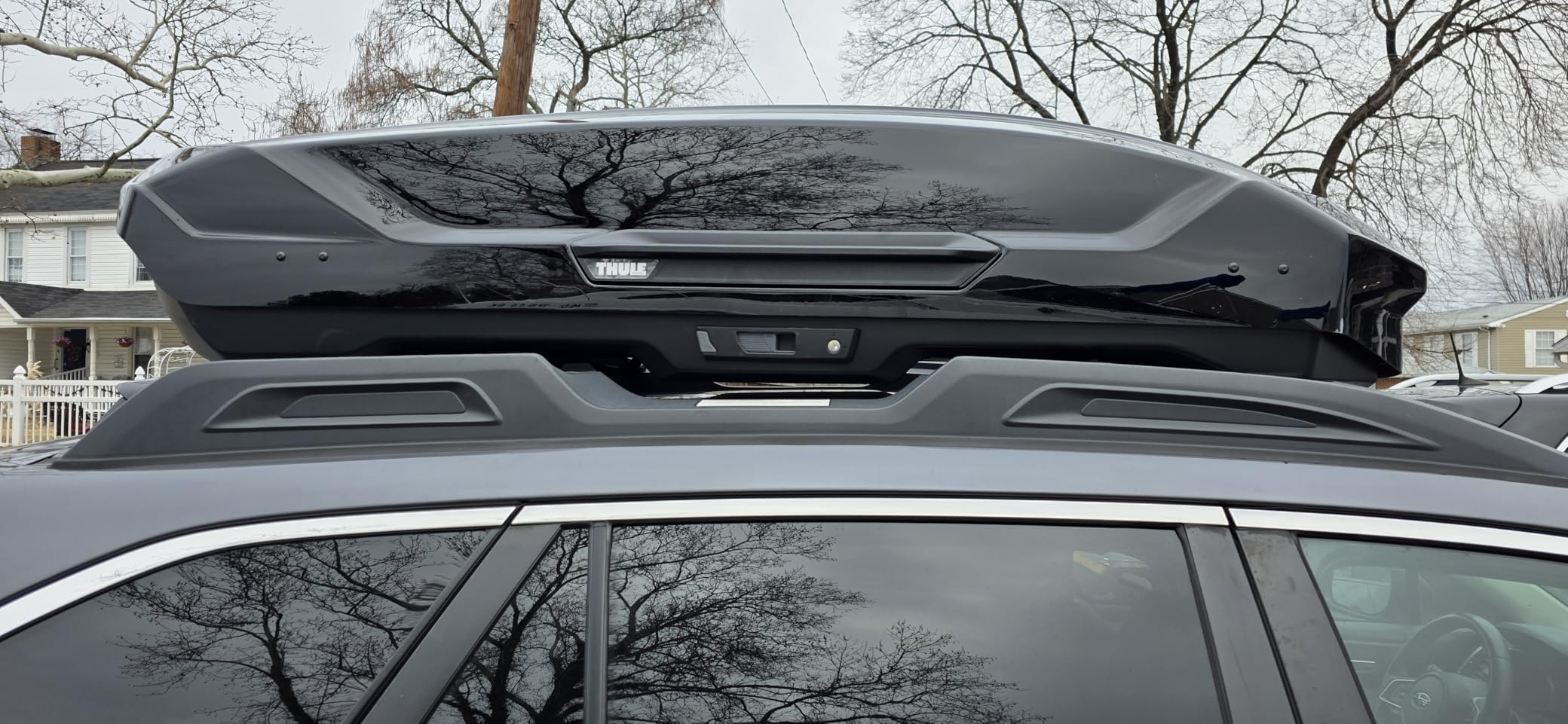
For Model Y owners who use rooftop storage frequently — multiple ski trips per winter, weekly camping in summer, regular long-distance travel — the Thule Motion 3 XL is the upgrade pick. Its aerodynamic engineering is genuinely better than the Yakima for highway range preservation.
The Aerodynamic Case for Tesla EV Owners
The Motion 3 XL’s wing-shaped, forward-leaning profile is the most aerodynamically refined design in the category. For internal-combustion vehicles, this saves 1-2 mpg. For a Tesla Model Y, the equivalent savings is meaningful range — potentially 15-30 miles on a 250-mile trip depending on speed and load.
Over a 5-year ownership horizon with frequent use, that range savings translates to:
- Less time at Superchargers
- Fewer charging stops on long road trips
- Lower total kWh consumed for the same trip
These benefits don’t directly show up on a price tag, but they’re real for owners who drive long distances regularly. Range is the Model Y’s headline feature; preserving it is the Model Y’s headline concern.
PowerClick and SlideLock for Glass-Roof Confidence
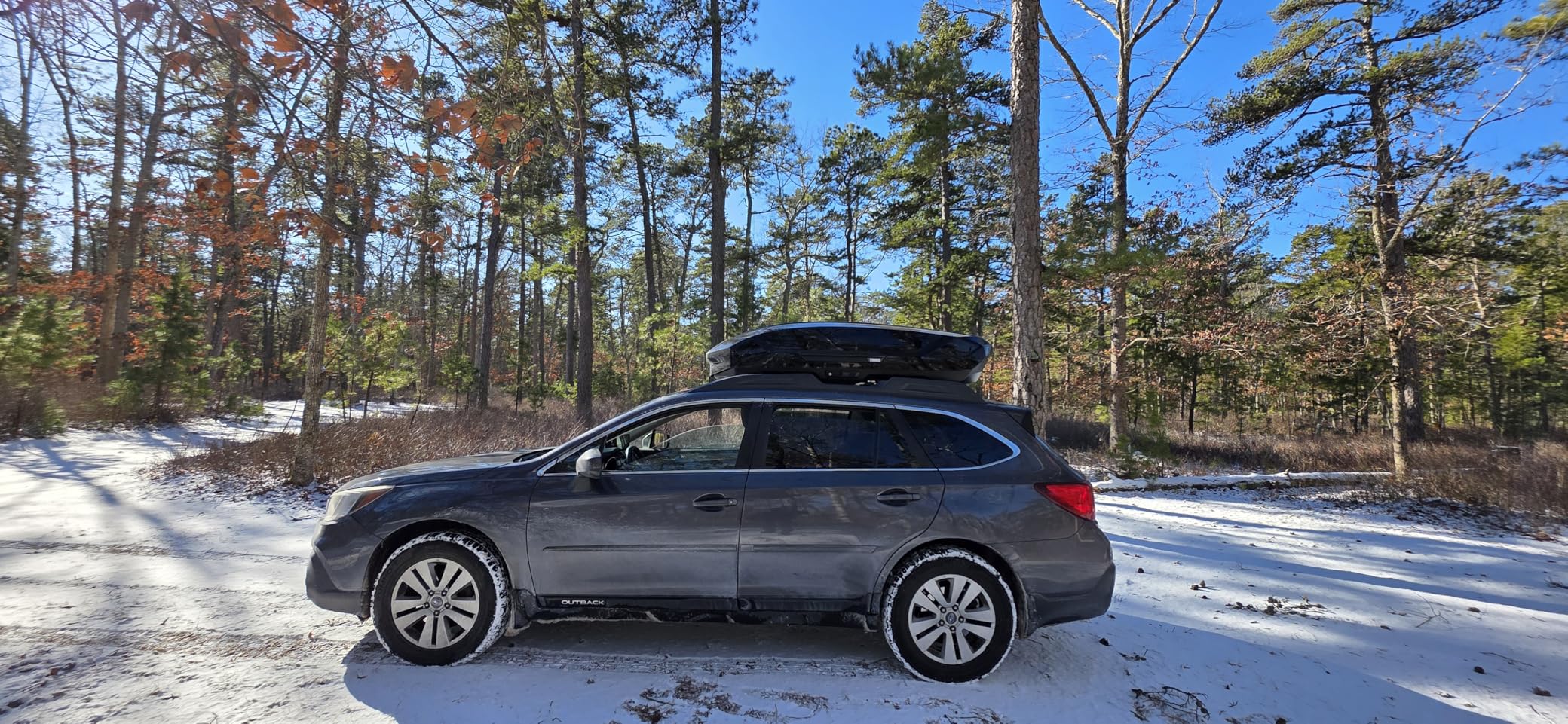
The Thule PowerClick mounting system uses an audible click when the clamp reaches correct torque on the crossbars. For Model Y owners specifically, this glass-roof-safety feature matters — there’s no scenario where you over-torque the box mounting and stress the crossbar-to-roof connection. The SlideLock lid mechanism automatically engages when the box closes, with even compression across the perimeter seal.
These daily-use refinements add up over years of seasonal install/remove cycles. Most Model Y owners install before a trip and remove after; the Thule’s PowerClick makes that cycle predictable and stress-free.
Ski Length for Model Y Skiers
The Motion 3 XL fits skis up to 200 cm. For Model Y owners who ski as their primary roof box use case, this 5 cm advantage over the Yakima can be decisive — particularly for owners running 195-200 cm touring or freeride skis where padded ski bags push real packed length over the Yakima’s 195 cm limit.
For a head-to-head decision between the two premium picks, see our full Thule Motion 3 XL vs Yakima SkyBox NX 18 comparison.
For the complete Thule Motion 3 XL specs, mounting, and waterproofing analysis, see our [Thule Motion 3 XL review].
Check current price on Amazon →
3. SportRack Vista XL — Best Budget Pick for Occasional Model Y Use
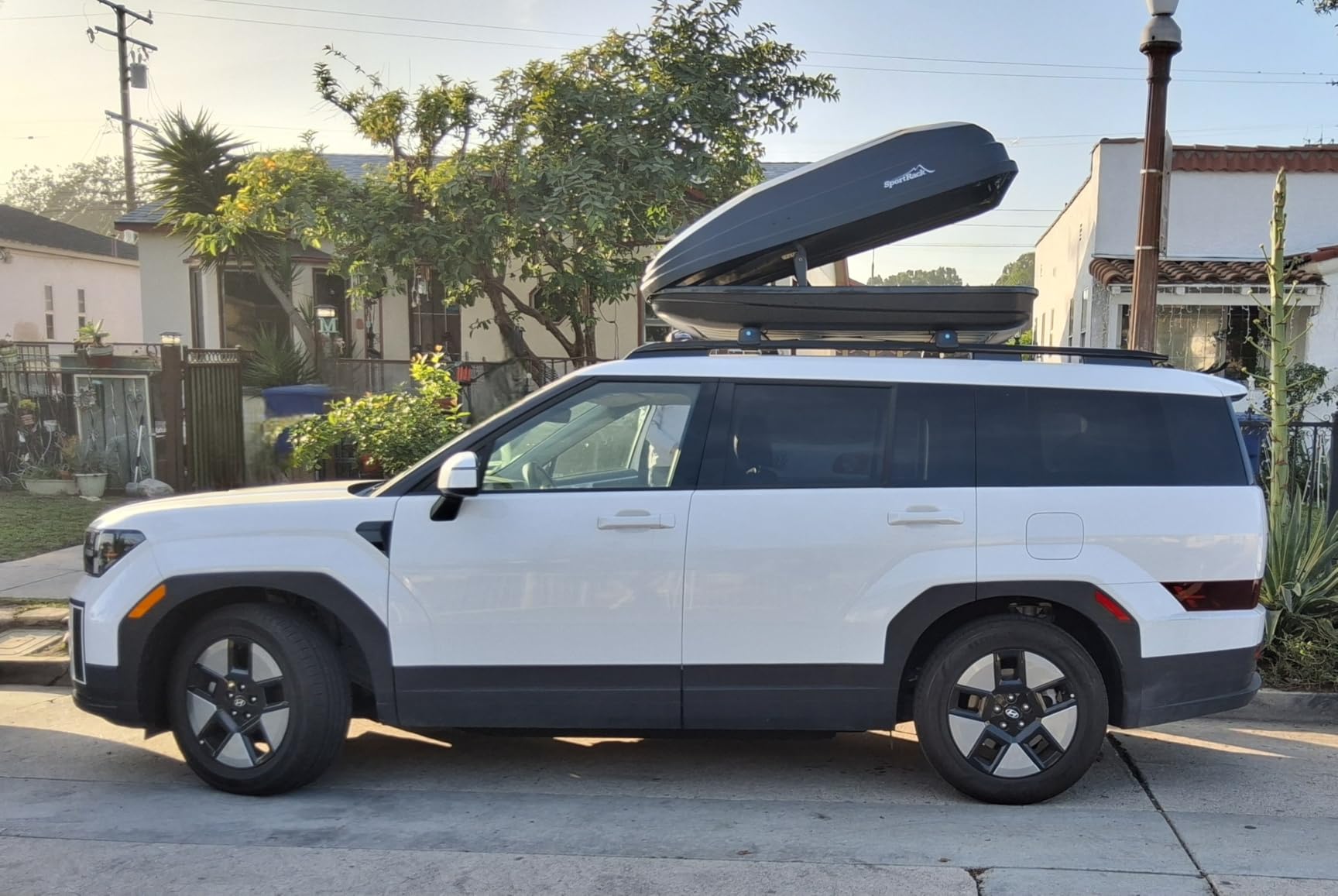
Not every Model Y owner needs a $700+ premium roof box. If your use case is one or two family road trips per year, the SportRack Vista XL delivers real 18 cubic feet of hard-shell storage at value pricing.
Model Y-Specific Trade-offs
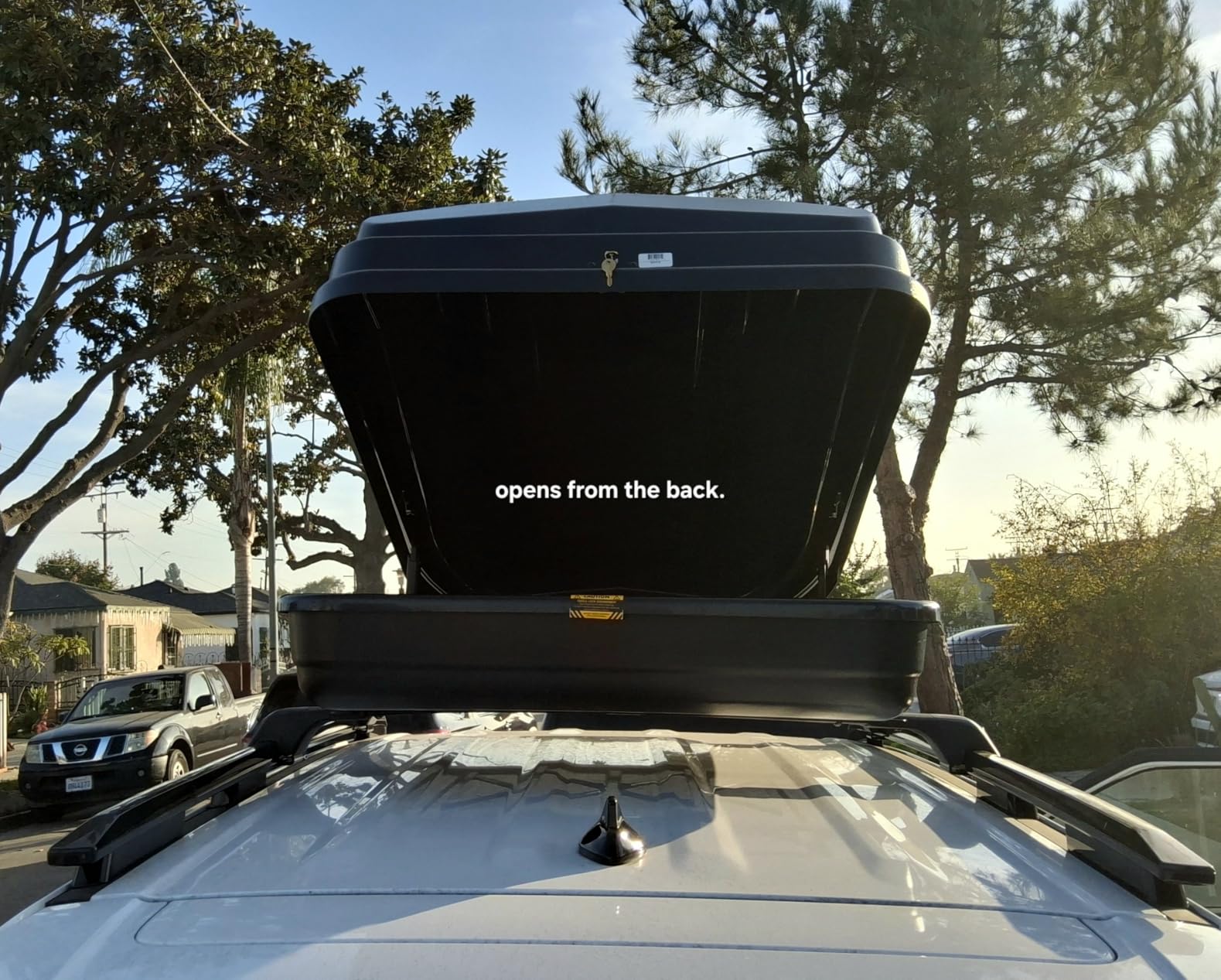
The Vista XL’s 63-inch length is meaningfully shorter than the 84-85 inch premium boxes. For Model Y owners, this is actually a fitment advantage. The Model Y’s curved liftgate creates a tight clearance arc — a long box positioned too far rearward can contact the hatch when it opens. The Vista XL’s shorter footprint reduces this risk significantly.
The trade-off is the 19-inch height. That’s notably taller than the 16.5-16.9 inch premium boxes, which means more drag and more range loss on the Model Y. Owner-measured numbers suggest the Vista XL costs roughly 2-3% more range than a Yakima or Thule premium box at highway speeds.
For occasional users, this range-loss tax is acceptable in exchange for the price savings. For frequent users, it’s not — the cumulative range loss across multiple trips per year quickly exceeds the upfront price savings.
Rear-Opening for Model Y Loading
The Vista XL opens from the rear of the vehicle. For Model Y owners loading at home, this design is genuinely useful — you stand behind the open liftgate, sort gear from the cargo area, and slide items forward into the box without walking around the vehicle. The flow matches how Model Y owners typically load anyway.
For full Vista XL details, see our complete [SportRack Vista XL review].
Check current price on Amazon →
4. MeeFar 21 Cu Ft — Best No-Crossbar Option for Model Y
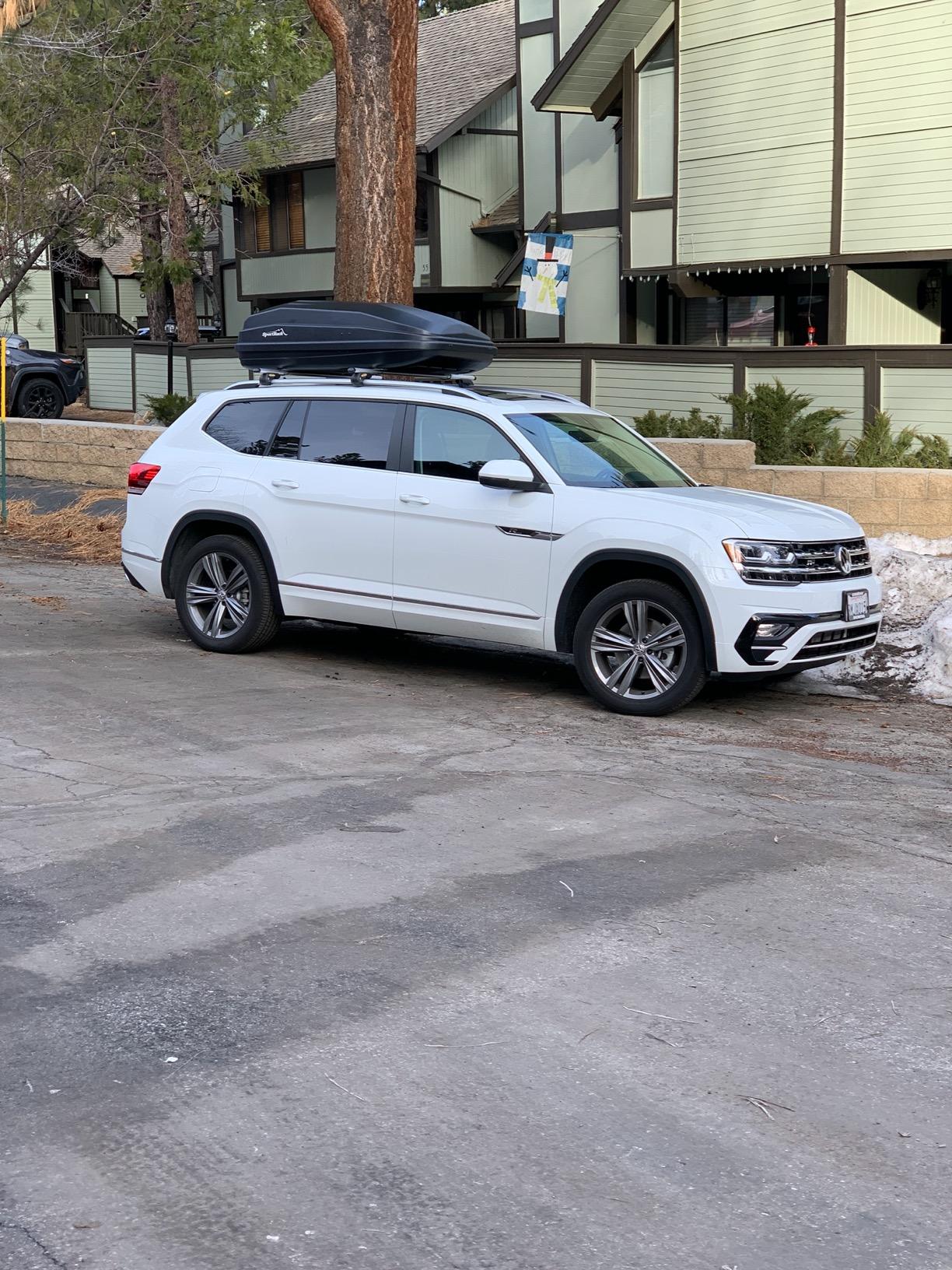
For Model Y owners who don’t want to commit to permanent crossbar installation — either because they’re worried about the glass roof, don’t use rooftop storage often enough to justify $300-$450 in crossbars, or simply don’t want the rack on the vehicle full-time — the MeeFar 21 Cu Ft soft cargo bag is the simplest alternative.
Why a Soft Bag Makes Sense for Some Model Y Owners
No crossbars required. The MeeFar mounts using six door hooks anchored to the door frames. No glass-roof concerns, no $100 Tesla install bill, no aftermarket crossbar research. Install when you need it, remove when you don’t.
Folds flat for storage. When not in use, the MeeFar collapses to roughly the size of a duffle bag. For Model Y owners in apartments or condos without dedicated garage space, this is a meaningful advantage over hard-shell boxes that need 7+ feet of storage space.
Lower upfront cost. The MeeFar at ~$130 versus a Yakima SkyBox NX 18 at $600+ plus $300+ in crossbars represents a substantial price difference. For Model Y owners who only need rooftop storage twice a year, the math favors the soft bag.
The Trade-offs to Understand
Aerodynamics are worse than a premium hard shell. The MeeFar will cost more Model Y range than a Thule Motion 3 XL or Yakima SkyBox NX 18. For occasional use, this matters less; for frequent use, it adds up.
Security is meaningfully lower. Soft bags rely on lockable zippers; they’re not theft-proof. For unattended overnight stops or trailhead parking with valuable gear, hard shells are safer.
Door-hook mounting requires the doors to remain closed. This is a feature, not a bug — the bag installs externally without compromising the cabin — but Model Y owners need to confirm proper installation prevents any door-frame stress.
For the full soft-bag breakdown including the heavier-duty Asinking and Mockins alternatives, see our Best Soft Rooftop Cargo Carrier guide. For the broader hard-shell vs soft-bag decision framework, see our Hard Shell vs Soft Rooftop Cargo Carrier comparison.
Check current price on Amazon →
Tesla Model Y Crossbar Compatibility Reference
Before purchasing any roof cargo box for your Model Y, you need crossbars. Here’s the practical buying guide for the four main crossbar options.
Tesla OEM Roof Rack (Manufactured by Yakima)
- Price: ~$350-$450 from Tesla, including installation appointment
- Load rating: 165 lbs (matches Tesla’s vehicle roof load rating)
- Compatibility: All Model Y years including 2020-2026 Juniper
- Key advantage: Tesla-installed means liability for glass roof issues stays with Tesla
- Best for: Owners who don’t want to DIY install on the glass roof
Aftermarket Tesla-Specific Crossbars
Brands include Tesery, Tesloid, EVbase, AUXPACBO, WheelX, and Zorik. Typical specifications:
- Price: $130-$250 on Amazon
- Load rating: 165-220 lbs depending on brand
- Compatibility: Most explicitly state Model Y 2020-2026 including Juniper
- Key feature to verify: Torque-limiting tool included for glass-safe installation
- Best for: Budget-conscious owners willing to DIY install with the proper torque tool
Universal Crossbars (Thule, Yakima Aftermarket)
For Model Y owners who already own Thule or Yakima accessories from previous vehicles, the brand-specific crossbar systems work with appropriate Model Y fit kits. Higher cost than Tesla-specific aftermarket but better long-term ecosystem compatibility.
What to Look For Regardless of Brand
- Torque-limiting tool included. Non-negotiable for glass-roof installation safety.
- Rubber pads or factory-arrow alignment marks. Ensures crossbars sit at Tesla’s intended stress points.
- Lock cores included. Many aftermarket crossbars include locks; Tesla OEM does as well.
- Low-profile design. Reduces baseline empty-rack drag (the ~1% range loss).
Range Loss Mitigation Strategies for Model Y Owners
If you’re going to install a roof cargo box on your Model Y, here’s how to minimize the range impact.
Choose Aerodynamic Over Tall
The Thule Motion 3 XL’s 16.9-inch height costs less range than the SportRack Vista XL’s 19-inch height. The wing-shaped, forward-leaning profile costs less range than a flat-topped boxy design. For Model Y owners, paying more for aerodynamic design is genuinely cost-effective over thousands of miles.
Remove When Not in Use
The biggest mistake Model Y owners make is leaving the box installed year-round. Even an empty box on the roof costs 5-8% range. Removing the box between trips (with the crossbars staying installed for the ~1% loss) recovers that capacity.
Plan Highway Speed
Drag scales with the square of speed. A loaded cargo box that costs 15% range at 65 mph costs 22-25% at 80 mph. For long road trips, slowing down by 5-10 mph noticeably reduces charging stops.
Pre-Plan Charging Stops
Use Tesla’s in-car navigation with the box installed before the trip. The system doesn’t automatically account for cargo-box drag, but you can add buffer to projected arrival ranges. A safe rule: assume 15-20% additional range consumption with a loaded box at highway speeds.
Frequently Asked Questions
What is the best roof cargo box for a Tesla Model Y in 2026?
The Yakima SkyBox NX 18 is the best overall pick for most Model Y owners. Tesla’s factory crossbars are manufactured by Yakima, so the SkyBox NX 18 mounts cleanly with no compatibility friction. Its 16.5-inch height is the lowest in its capacity class, minimizing range loss. The 53 lb weight leaves roughly 102 lbs of usable cargo capacity within the Model Y’s 165 lb roof load rating.
Will installing a roof cargo box crack my Tesla glass roof?
Not if you use proper torque-limiting installation tools. The risk comes from over-tightening crossbar clamps past the glass roof’s tolerance, which is prevented by the torque-limiting tools included with Tesla’s OEM roof rack and quality aftermarket alternatives. For owners who don’t trust DIY installation, Tesla offers professional installation for roughly $100, which transfers liability for any installation damage to Tesla.
Are Tesla’s factory crossbars worth the premium over aftermarket options?
For most Model Y owners, yes. The Tesla OEM rack is manufactured by Yakima, includes professional installation, and transfers installation liability to Tesla. Aftermarket Tesla-specific crossbars (Tesery, Tesloid, EVbase, etc.) cost less but require careful DIY installation and put liability for any glass damage on the owner. The price difference is roughly $200-$300 — a small percentage of Model Y total ownership cost.
How much range will I lose with a roof cargo box on my Model Y?
Owner-measured data suggests:
- Empty crossbars only: ~1% range loss
- Empty cargo box on crossbars: 5-8%
- Loaded cargo box at highway speeds: 15-20%
The exact loss depends on box height, profile shape, vehicle speed, and cargo weight. Aerodynamic premium boxes (Thule Motion 3 XL) lose less than budget tall boxes (SportRack Vista XL). EV-aware route planning should add 15-20% buffer to projected ranges for long trips with loaded boxes.
What’s the Tesla Model Y roof load rating?
The Model Y’s roof load rating is 165 lbs total — including the crossbars, the cargo box, and everything packed inside. After accounting for crossbars (~10 lbs) and a typical premium cargo box (~53 lbs), usable cargo capacity is approximately 102 lbs. Heavy items like coolers full of ice, multiple bikes, or rooftop tents may push past this limit and should stay inside the vehicle.
Will a Yakima SkyBox NX 18 fit on Tesla OEM crossbars?
Yes. Tesla’s factory crossbars are manufactured by Yakima specifically for the Model Y. Yakima cargo boxes including the SkyBox NX 18 mount cleanly on Tesla OEM crossbars with no adapters required. Model Y owners report consistently smooth installation. The 24-40 inch crossbar spread tolerance accommodates Tesla’s exact spread without modification.
Will a Thule Motion 3 XL fit on Tesla OEM crossbars?
Yes, with appropriate Thule fit verification. While Tesla OEM crossbars are made by Yakima, the Thule Motion 3 XL is designed to mount on most aerodynamic crossbars within Thule’s compatibility specifications. Verify with Thule’s official fit guide for your specific Model Y year before ordering — both pre-Juniper and Juniper compatibility should be confirmed.
Can I leave a roof cargo box on my Model Y permanently?
You can, but most Tesla owners don’t. The 5-8% range loss with an empty box is significant over thousands of highway miles, and continuous UV/weather exposure shortens the box’s lifespan. The recommended approach is to leave the crossbars installed year-round (only ~1% range cost) and install the box only when needed for trips.
Does the 2025-2026 Model Y Juniper refresh affect crossbar compatibility?
Most aftermarket Tesla-specific crossbar manufacturers now explicitly list Juniper compatibility. Tesla’s OEM rack is updated for Juniper automatically. The exterior changes from the Juniper refresh are minor enough that most existing Tesla-specific crossbars work, but verify before ordering. Cargo box compatibility (Yakima, Thule, etc.) is unaffected — once crossbars are installed, the box mounts to standard crossbar profiles regardless of Juniper status.
What about Tesla’s own cargo bundle from third-party sellers?
Tesla-specific brands like Tesloid sell complete Model Y cargo box bundles ($1,099+ for crossbars + cargo box). These can simplify the buying process but typically use proprietary cargo boxes that aren’t from major brands. For most owners, mixing Tesla OEM crossbars (or Tesla-specific aftermarket) with a major-brand cargo box (Yakima SkyBox NX 18 or Thule Motion 3 XL) delivers better long-term durability and resale value.
Can I use a soft cargo bag on a Tesla Model Y?
Yes. The MeeFar 21 Cu Ft and similar premium soft bags mount using door hooks anchored to the door frames, completely bypassing the crossbar question. This is the simplest path to occasional rooftop storage on a Model Y without committing to crossbar installation. Trade-offs include worse aerodynamics (more range loss than premium hard shells), lower security, and shorter ownership lifespan than hard-shell options.
Will a roof cargo box affect my Model Y’s autopilot or sensors?
Roof cargo boxes don’t interfere with the Model Y’s vision-based Autopilot system because the cameras are positioned along the windshield and side mirrors, not on the roof. The roof-mounted sensor (if present in your model year) is small and positioned forward of where typical cargo boxes mount. However, an oversized box that extends forward past the windshield line could potentially affect forward camera vision — verify hatch and front clearances during installation.
How loud is a roof cargo box on a Tesla?
The Model Y has a quiet cabin to begin with, so any roof-mounted accessory creates noticeable wind noise relative to baseline. Premium aerodynamic boxes (Thule Motion 3 XL, Yakima SkyBox NX 18) are described by verified buyers as “surprisingly quiet” at highway speeds. Budget tall boxes create more noise. Wind noise generally increases with speed; reducing highway speed by 5-10 mph noticeably decreases cabin noise.
Final Recommendation for Tesla Model Y Owners
For most Model Y owners in 2026, the Yakima SkyBox NX 18 combined with Tesla OEM crossbars is the cleanest answer. The Yakima manufacturing origin of the Tesla rack means perfect compatibility, the 16.5-inch height minimizes range loss, the 53 lb weight stays within Model Y’s load rating with usable cargo capacity remaining, and the SKS lock system provides meaningful security. The total package — crossbars plus box — runs roughly $1,000 and delivers a setup that should last 10+ years.
For frequent travelers who prioritize aerodynamics and ski-length capacity, the Thule Motion 3 XL is the upgrade pick. The wing-shaped profile delivers the lowest highway drag in the category — meaningful for Model Y range — and the 200 cm ski clearance fits longer alpine gear that the Yakima cannot.
For occasional use or budget-conscious buyers, the SportRack Vista XL delivers genuine 18 cubic feet of hard-shell storage at lower cost. The shorter 63-inch length is a real fit advantage for the Model Y’s curved liftgate, but the taller 19-inch height costs more range than premium alternatives.
For Model Y owners who want to avoid permanent crossbar installation entirely, the MeeFar 21 Cu Ft soft cargo bag is the simplest path. Door-hook mounting bypasses the crossbar question and the glass-roof concern simultaneously, at the cost of worse aerodynamics and lower security.
The right choice for your Model Y depends on how often you’ll use the box, how far you typically drive on trips, what you’ll be carrying, and whether you’re comfortable with permanent crossbar installation on the glass roof. Match these factors carefully and any of the four picks above will serve you well across years of Tesla ownership.
For broader category coverage including SUV-specific recommendations and use-case-specific picks, start with our Best Roof Cargo Box 2026 main guide or our Best Roof Cargo Box for SUV 2026 guide.
Continue Reading
- Best Roof Cargo Box 2026: The Complete Buying Guide — Hub guide covering all major categories.
- Best Roof Cargo Box for SUV 2026 — SUV-specific recommendations including premium and electric models.
- Yakima SkyBox NX 18 Full Review — Tesla-compatible premium hard-shell deep dive.
- Thule Motion 3 XL vs Yakima SkyBox NX 18 — Premium head-to-head for Tesla buyers.
- Hard Shell vs Soft Rooftop Cargo Carrier 2026 — Format decision framework for Tesla owners.
- Best Soft Rooftop Cargo Carrier 2026 — No-crossbar alternative analysis.
- Waterproof Rooftop Cargo Carrier 2026 — Rain performance for road-trip Tesla owners.
- Best Roof Box for Skis 2026 — Length-first ski recommendations.
- Best Roof Cargo Box for Golf Clubs 2026 — Golf bag and driver fit analysis.
Prices and availability are accurate as of publication. As an Amazon Associate, we earn from qualifying purchases made through links on this page. Affiliate commissions do not influence our rankings — every recommendation is based on Tesla-specific compatibility analysis, owner-measured range data, and verified buyer feedback.