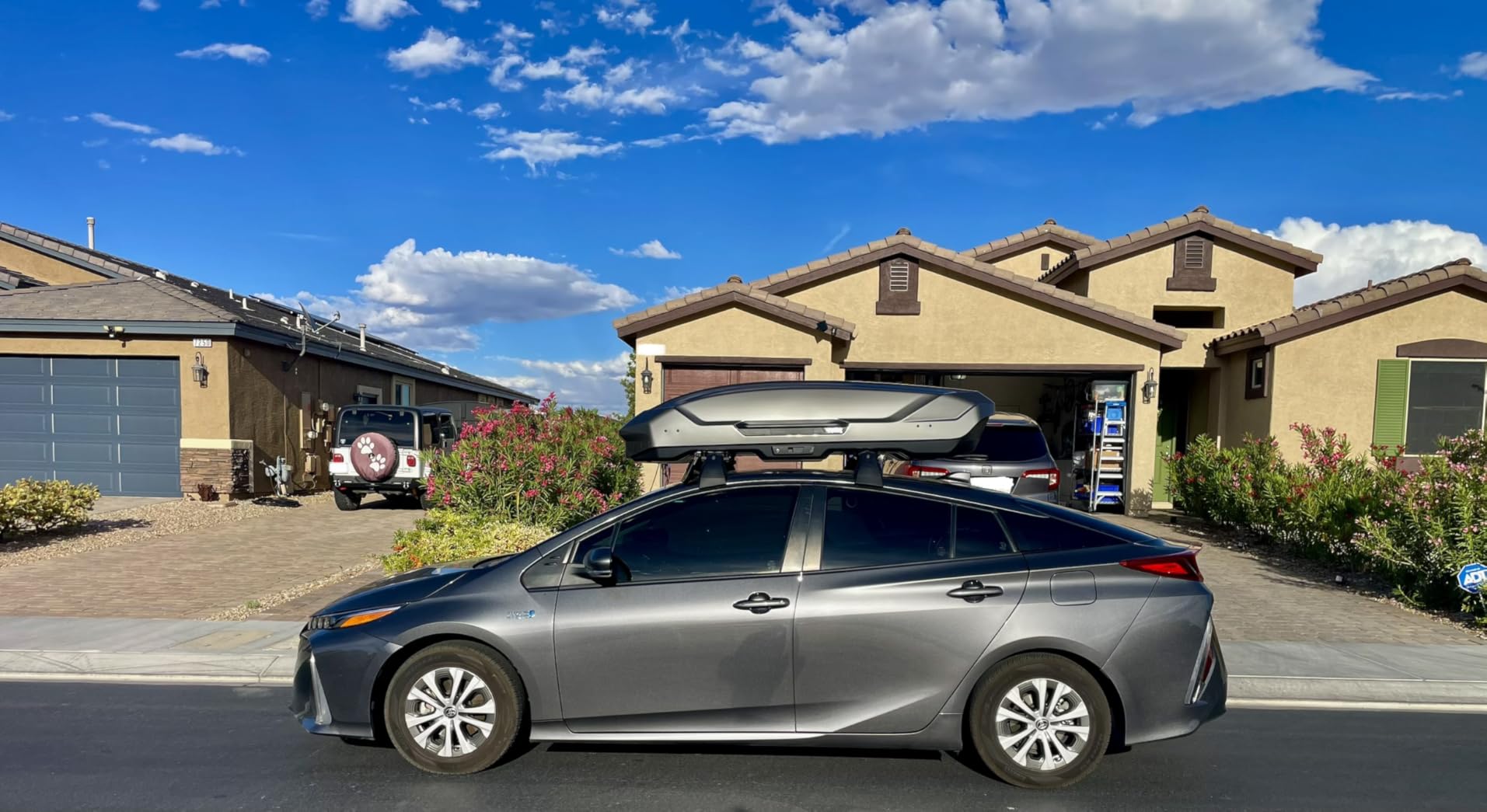
If you have narrowed your roof cargo box shortlist down to two finalists, you are probably looking at the Thule Motion 3 XL and the Yakima SkyBox NX 18. Both sit in the same premium tier. Both list 18 cubic feet of capacity. Both fit adult skis. Both come from companies that have been engineering rooftop storage since before most of us learned to drive.
So which one should actually go on your roof?
I have spent more weekends than I can count loading and unloading roof boxes for ski trips, family road trips, and camping weekends. After cross-referencing the spec sheets, real buyer feedback, and the small details that only matter once you live with these boxes, here is the honest, no-fluff comparison.
As an Amazon Associate, I earn from qualifying purchases made through links on this page. Prices and availability are accurate as of publication.
Quick Verdict: The 30-Second Answer
If you do not want to read the full breakdown, here is the short version:
- Choose the Thule Motion 3 XL if you want the most refined daily experience — PowerClick torque-confirmation mounting, SlideLock automatic lid security, a fractionally longer 200 cm ski capacity, and a sculpted profile that looks more at home on modern SUVs.
- Choose the Yakima SkyBox NX 18 if you want 95% of the premium experience for less money — dual-sided access, SKS keyed locks that work with your other Yakima gear, a torque-limiting mounting knob, and a matte nano-texture finish that ages better than gloss shells.
Both are excellent. Neither will disappoint. The “winner” depends entirely on what you value: hardware refinement (Thule) or ecosystem value (Yakima).
At-a-Glance Spec Comparison
Let’s get the numbers out of the way first. The specs tell most of the story, but not all of it.
| Spec | Thule Motion 3 XL | Yakima SkyBox NX 18 |
|---|---|---|
| Listed capacity | 18 cu ft | 18 cu ft |
| External length | 85 inches | 84 inches |
| External width | 35.2 inches | 36 inches |
| External height | 16.9 inches | 16.5 inches |
| Listed weight | 53 lbs | 53 lbs |
| Max ski length | 200 cm | 195 cm |
| Opening style | Dual-sided | Dual-sided |
| Mounting system | PowerClick (torque indication) | Universal with torque-limiting knob |
| Locking system | SlideLock automatic | SKS Same Key System |
| Crossbar spread (min/max) | Per Thule fit guide | 24” – 40” |
| Profile | Wing-shaped, forward-leaning | Flat-top with nano-texture finish |
| Ecosystem | Thule rack, bike, kayak gear | Yakima rack, snow, bike, kayak gear |
| Price position | Premium | Premium / value middle ground |
Notice how close these two boxes really are. We are talking about a 1-inch length difference, a 0.4-inch height difference, and identical weight. The headline numbers are almost a tie. The real differences hide in the hardware and ecosystem details below.
Round 1: Capacity and Real-World Loading
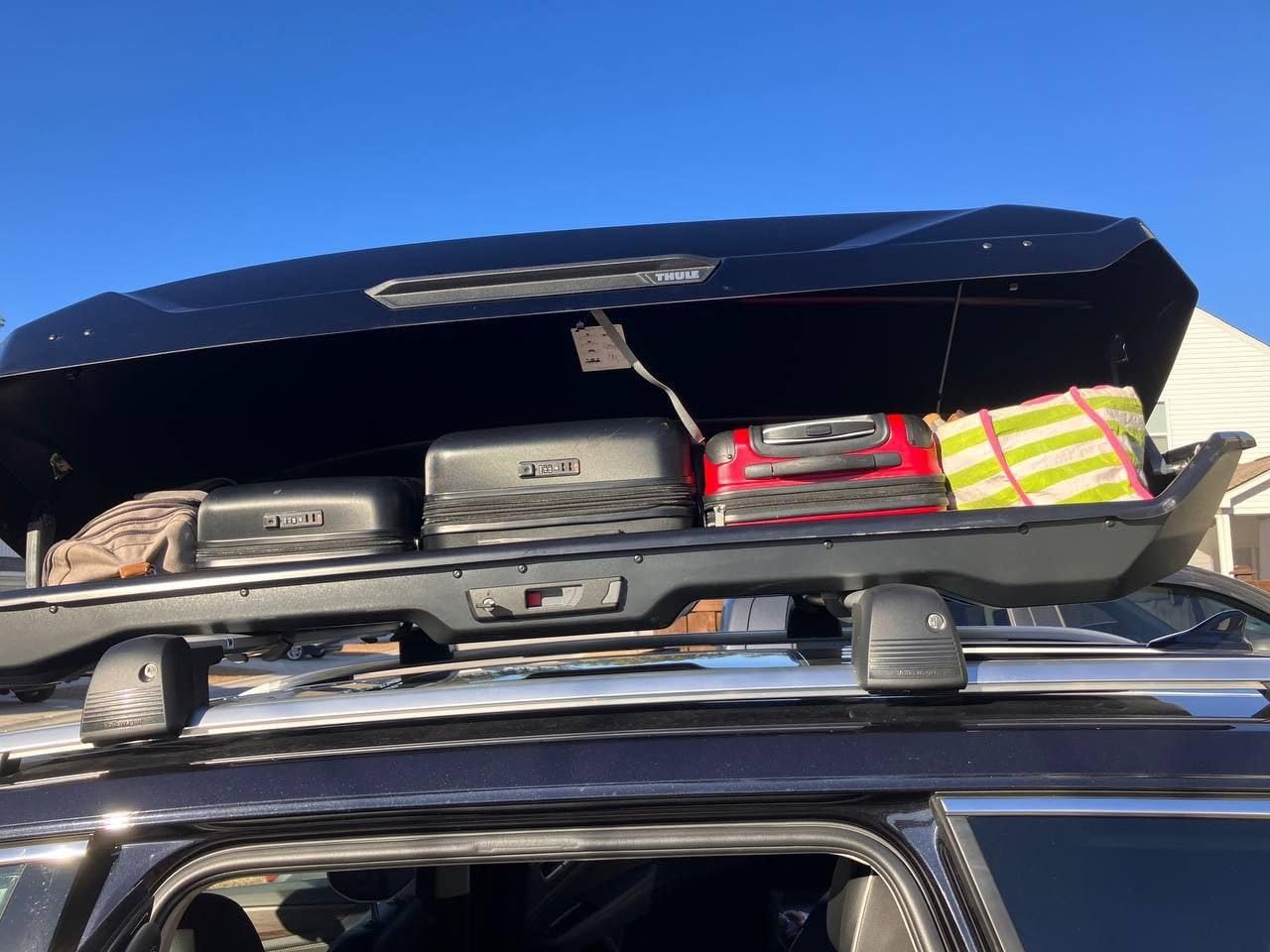
Both boxes claim 18 cubic feet. Both have flat, unobstructed interior floors. In practice, you can load similar gear into either one — and verified buyer feedback for both confirms the marketed capacity translates to real-world hauling capability.
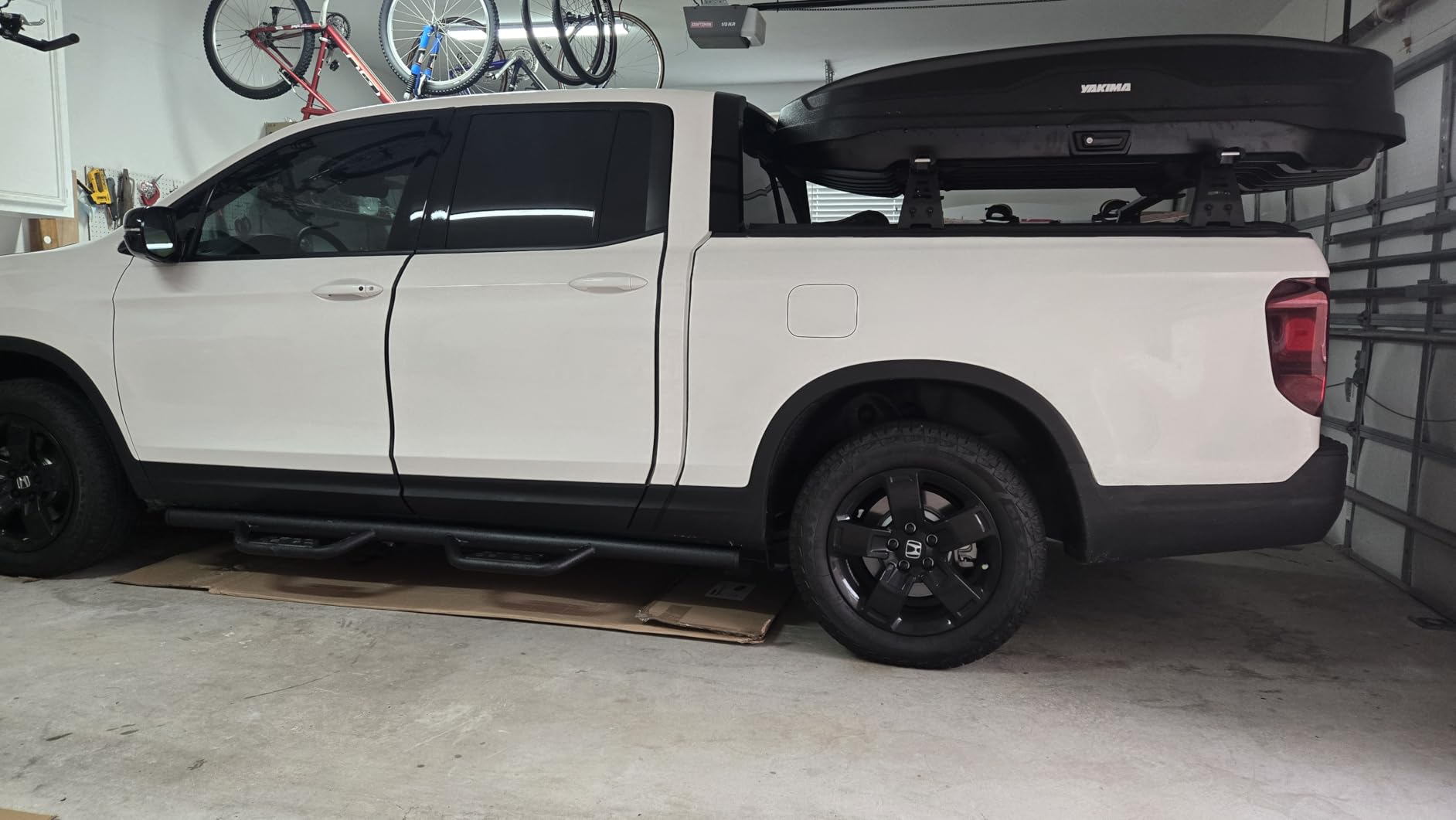
One Yakima SkyBox NX 18 owner documented a single load that included an inflatable paddleboard, three river tubes, three carry-on suitcases, an extra-large duffel, two small duffels, an air pump, a tote bag, and four pairs of sandals — with room to spare. That’s a serious haul, and the Thule Motion 3 XL would handle the same load with no trouble.
Where the difference shows up: length-critical gear.
The Thule Motion 3 XL’s listed 200 cm ski capacity vs the Yakima’s 195 cm sounds like a tiny difference. For 95% of adult skiers, it doesn’t matter — most recreational alpine skis fall between 160 cm and 185 cm. But if you ski powder, race longer skis, or use padded ski bags that add 5-10 cm of bulk, that extra inch in the Thule can be the difference between fitting your gear and leaving a pair behind.
Round 1 winner: Tie for general luggage. Slight edge to Thule for long-ski scenarios.
Round 2: Mounting Systems — PowerClick vs Torque Knob
This is where the two boxes start to feel meaningfully different. Both manufacturers solved the same problem (how do you know when the box is tight enough?) with different engineering philosophies.
Thule’s PowerClick System
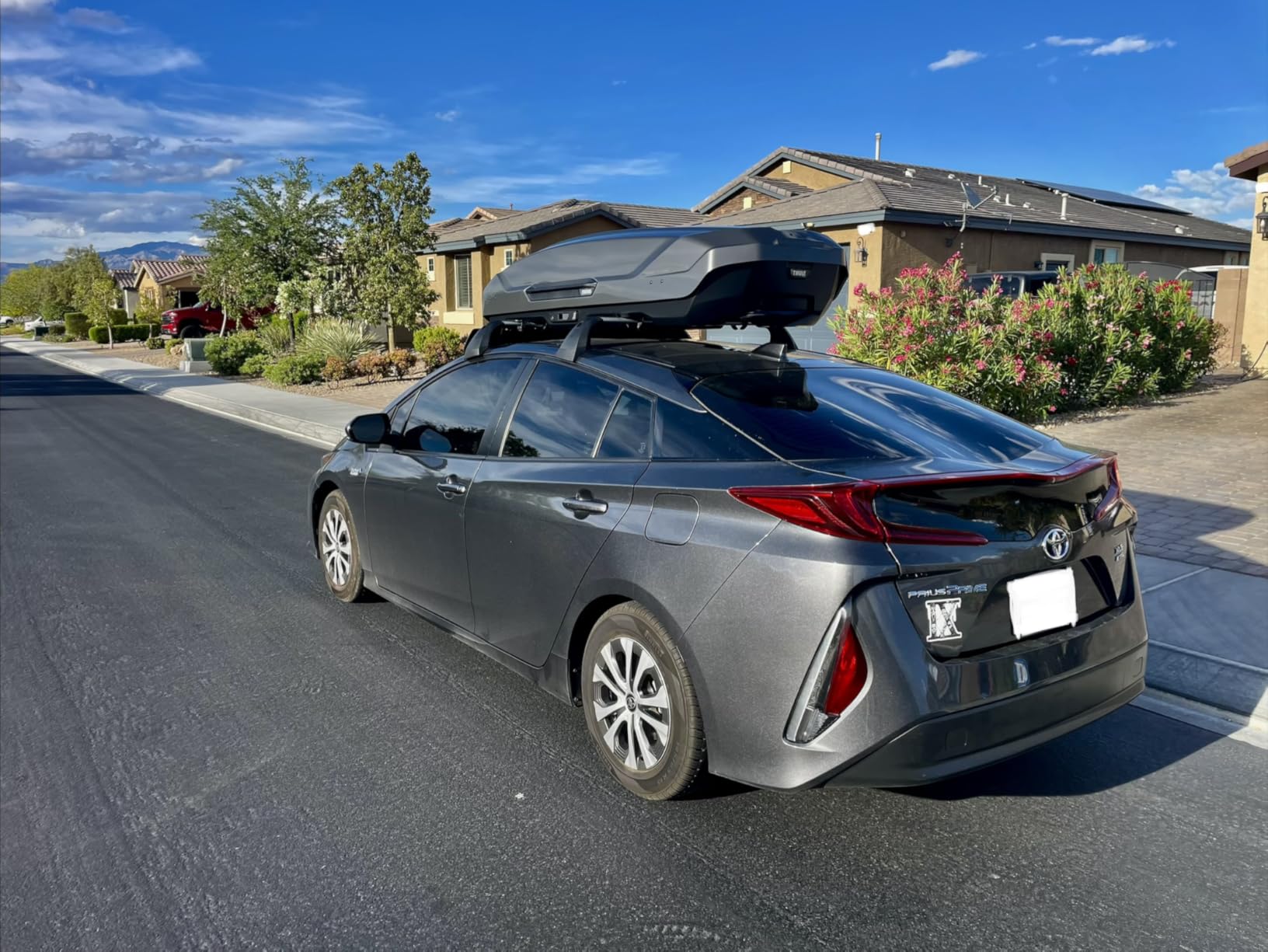
PowerClick is a torque-indicating quick-mount system. You tighten the clamp, and when it reaches the correct tension, you hear an audible click. No guesswork. No worrying that you over-tightened on one side and under-tightened on the other.
For occasional users — and most roof box owners only mount their box 4-8 times per year — this is genuinely valuable. It is easy to forget exactly how tight is right when months pass between trips.
Yakima’s Torque-Limiting Knob
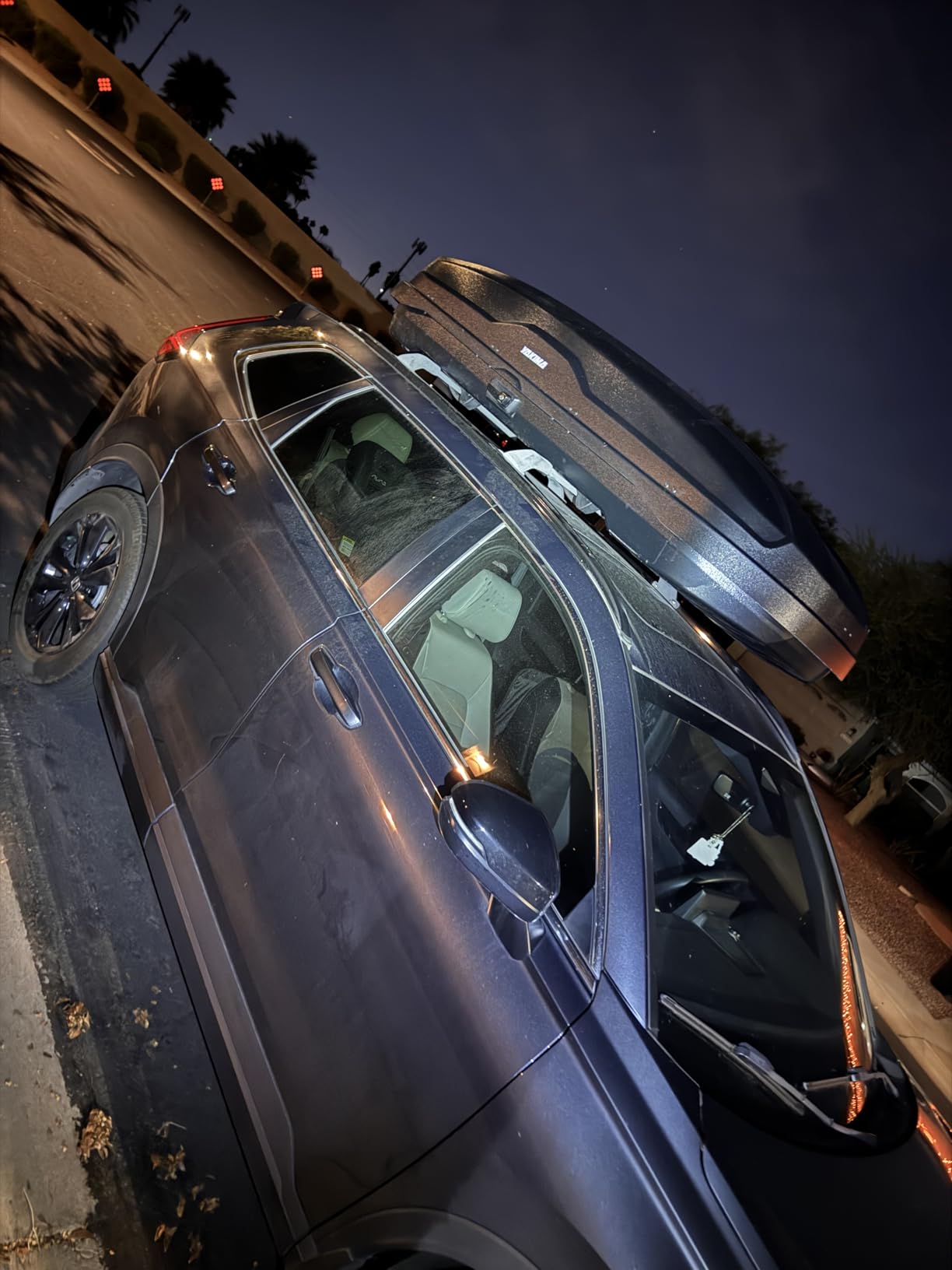
Yakima’s solution is mechanical: a torque-limiting knob that physically refuses to over-tighten. You turn it until it clicks free, and you know you’ve reached the correct tension.
Functionally, the two systems achieve the same goal. The Thule feels slightly more refined in operation; the Yakima feels slightly more straightforward. Both prevent the two failure modes that scare roof box owners: under-tightening (box shifts on the highway) and over-tightening (stripped hardware).
Round 2 winner: Slight edge to Thule for refinement, but the practical difference is small. Both systems work.
Round 3: Locking — SlideLock vs SKS
How a roof box locks matters more than people think. You’re trusting it with thousands of dollars in skis, luggage, or camping gear, often in unfamiliar parking lots.
Thule’s SlideLock System
The SlideLock system separates locking from opening. When you close the lid, it locks automatically and provides a visual indicator confirming it is secured. You don’t have to remember to turn a key — the box does it for you.
The practical benefit: large roof boxes can sometimes appear closed when one corner is not fully seated. SlideLock removes that ambiguity. If the indicator shows green, you’re good.
Yakima’s SKS (Same Key System)
Yakima’s approach is more about ecosystem than automation. SKS stands for Same Key System — one key works across every Yakima product you own. If you already have a Yakima bike rack, hitch rack, or roof rack, you can buy the SkyBox NX with an SKS lock core that matches your existing key.
For Yakima loyalists, this is a quiet superpower. One key. Every product. No keychain bloat.
Round 3 winner: Thule wins on lid feedback. Yakima wins on ecosystem convenience. Pick based on whether you already own Yakima gear.
Round 4: Vehicle Fit and Hatch Clearance
This is the round most buyers underestimate, and the round that sends the most boxes back to Amazon.
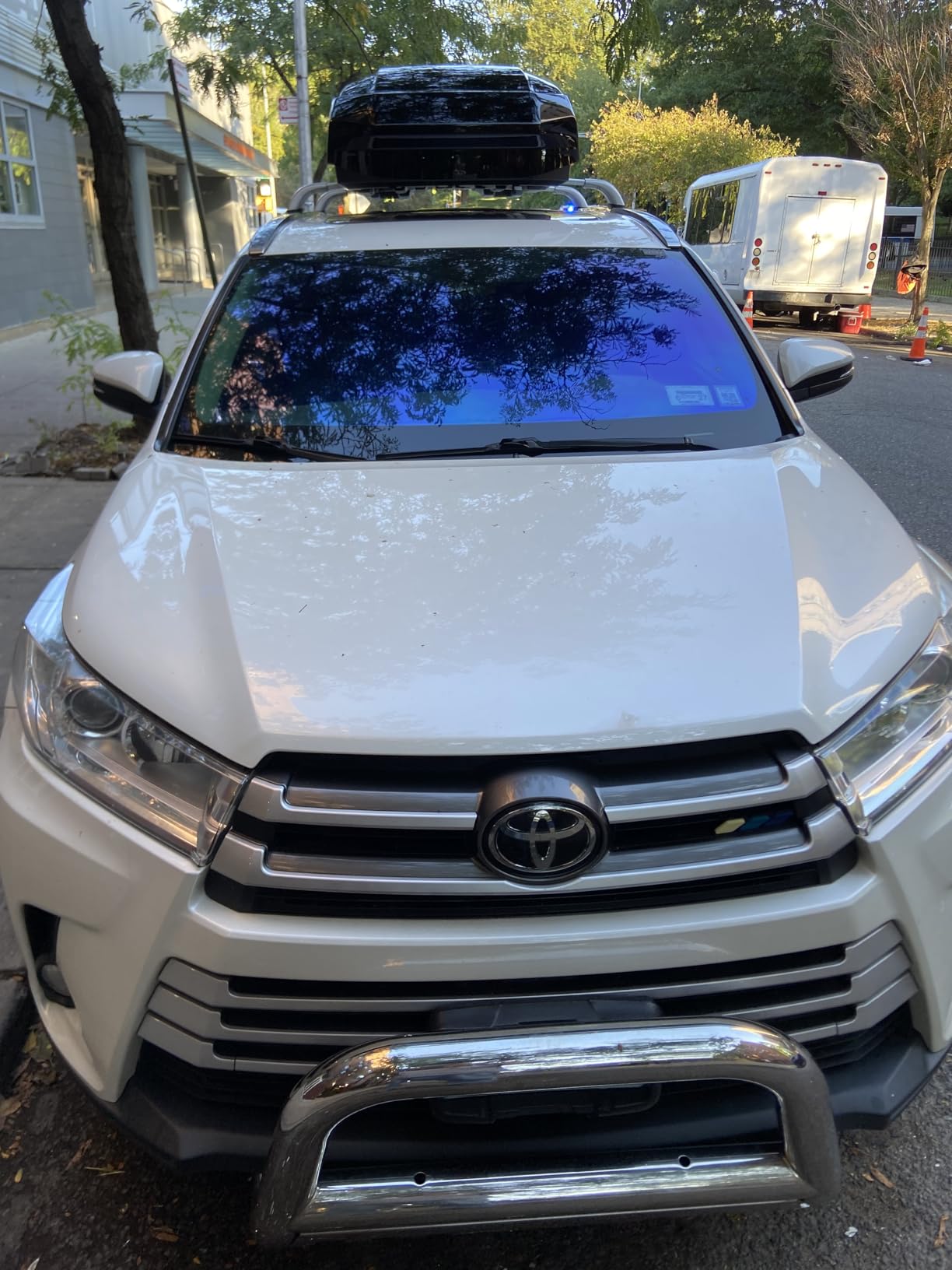
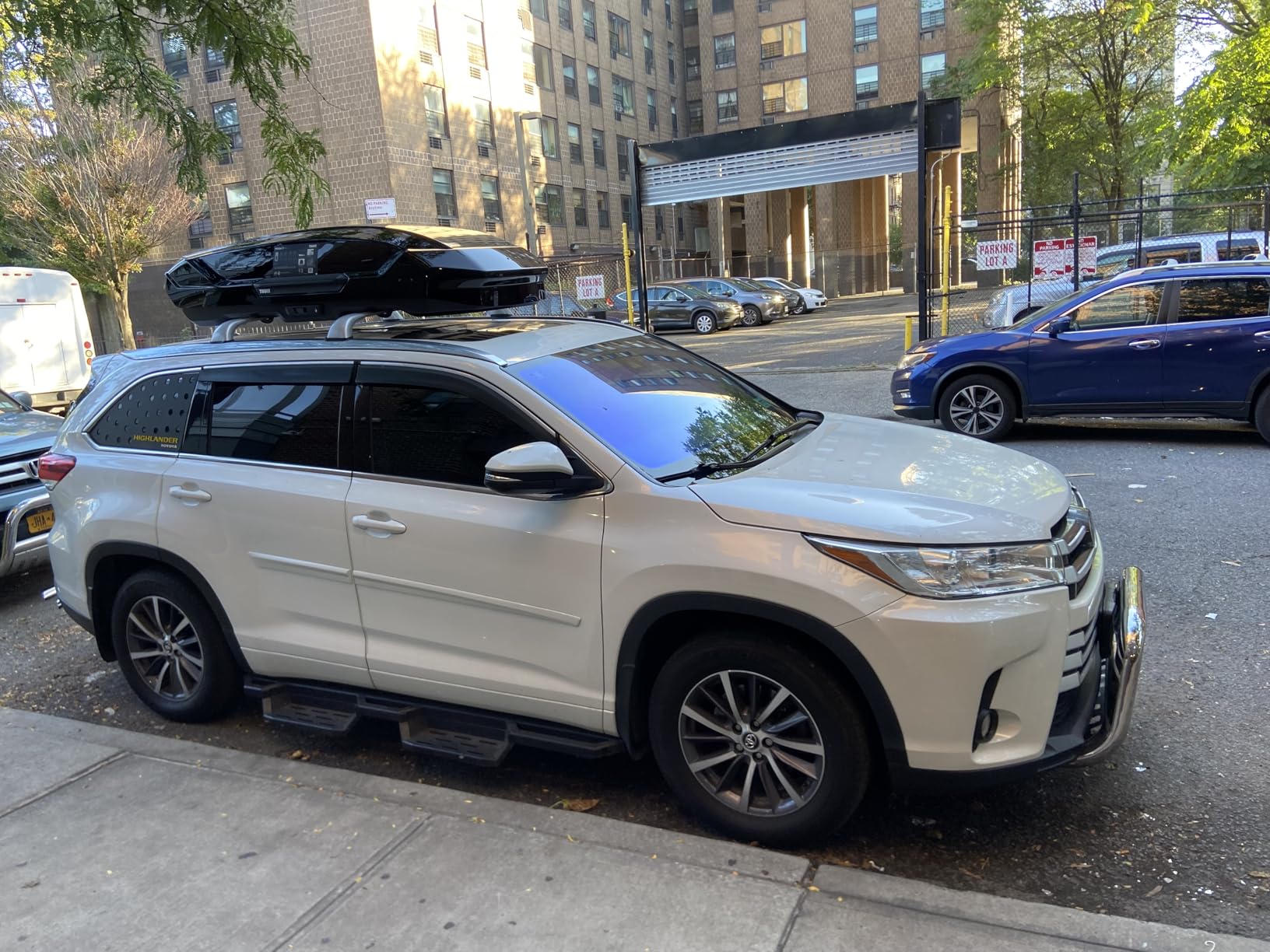
Both boxes are roughly 85 inches long. That length is what makes them useful for skis — and it’s also what makes hatch clearance critical. If your rear hatch swings up into the back of the box, you’ve got an expensive paperweight.
Thule’s Approach
Thule publishes a front-clearance measurement for every vehicle. For the Motion 3 XL on the example reference vehicles, that figure is 52 1/8 inches. You measure from your front crossbar forward, and if you have the listed clearance, the box fits without the hatch hitting it.
Yakima’s Approach
Yakima takes a similar but slightly less prescriptive approach. The SkyBox NX 18 needs a crossbar spread of 24-40 inches and works on most factory rails, aero crossbars, and Yakima StreamLine bars. Verified Toyota Highlander, Honda Pilot, and Subaru Outback owners report clean fits without hatch interference.
Real-world note: One Yakima buyer specifically called out that the NX 18 is “huge” and recommended measuring with a tape measure before ordering. The same advice applies to the Thule. Neither box is forgiving on shorter rooflines like the Honda CR-V or Mazda CX-5.
Round 4 winner: Tie. Both require careful measurement. Thule has slightly more detailed published fit guides; Yakima has more flexibility on aftermarket crossbar compatibility.
Round 5: Looks and Finish
This is the round that doesn’t matter to everyone — but if you’ve spent $50K on a new SUV, you probably don’t want a black plastic brick clamped to the roof.
Thule Motion 3 XL: Sculpted Premium
The Motion 3 XL has a wing-shaped profile with a forward-leaning nose. It looks like it was designed in the same studio that designed your SUV. On modern crossovers, EVs, and premium SUVs, it blends in. On older boxy vehicles, it still looks intentional rather than tacked on.
Yakima SkyBox NX 18: Matte Functional
The SkyBox NX 18 uses a nano-texture matte finish. It’s not as visually sculpted as the Thule, but it has a practical advantage: matte finishes hide road grime, salt spray, and minor scratches far better than glossy shells. After a winter of ski trips, the NX 18 still looks presentable. A glossy black box would look like it had been through a war.
Round 5 winner: Thule wins on visual design. Yakima wins on long-term cosmetic durability. Pick based on whether you care more about how it looks new or how it looks after three years.
Round 6: Daily Usability — The Stuff That Actually Matters
After mounting and locking and fit, the question becomes: what’s it like to use this thing every weekend?
Loading and Unloading
Both boxes open from either side. This sounds minor until you’ve tried to load skis into a passenger-side-only box in a tight ski resort parking lot at 6 AM in February. Dual-sided access is the single most important “quality of life” feature on a premium roof box, and both boxes have it.
The Thule Motion 3 XL has a slight edge on lid stiffness — the reinforced lid feels more controlled when fully open, which matters when you’re loading heavy gear in windy conditions.
The Yakima SkyBox NX 18 lid is lighter, which makes opening easier but means you need to be deliberate when closing a fully packed box. One verified buyer specifically called this out as a minor frustration.
Highway Performance
Both boxes are quiet at highway speeds. Both add 1-3 mpg of fuel economy penalty (or equivalent EV range reduction). Verified buyers running both boxes on large SUVs report similar wind noise levels — described as “surprisingly quiet” with proper installation.
The Thule’s lower 16.9-inch height gives it a marginal aerodynamic edge over the Yakima’s 16.5-inch (wait — the Yakima is actually shorter; the Thule has the more aggressive front taper, which matters more than total height for drag reduction). In real driving, the difference is unnoticeable.
Weather Protection
Both boxes are weather-resistant for normal road use. Multiple Yakima SkyBox NX 18 owners report it stayed completely dry through heavy rain. Thule positions the Motion 3 line as similarly weather-ready.
Neither box should be considered fully waterproof in extreme conditions. For electronics, cameras, or down sleeping bags, use waterproof inner bags as a backup layer. This is true of every rooftop cargo box on the market — including the best soft rooftop cargo carriers we reviewed.
Round 6 winner: Tie. Both deliver a premium daily experience.
Round 7: The Ecosystem Question
This round is where most people make the wrong decision.
If you already own gear from one brand, buy that brand’s roof box. The savings on shared keys, compatible mounting hardware, and unified customer support are real.
Yakima Ecosystem
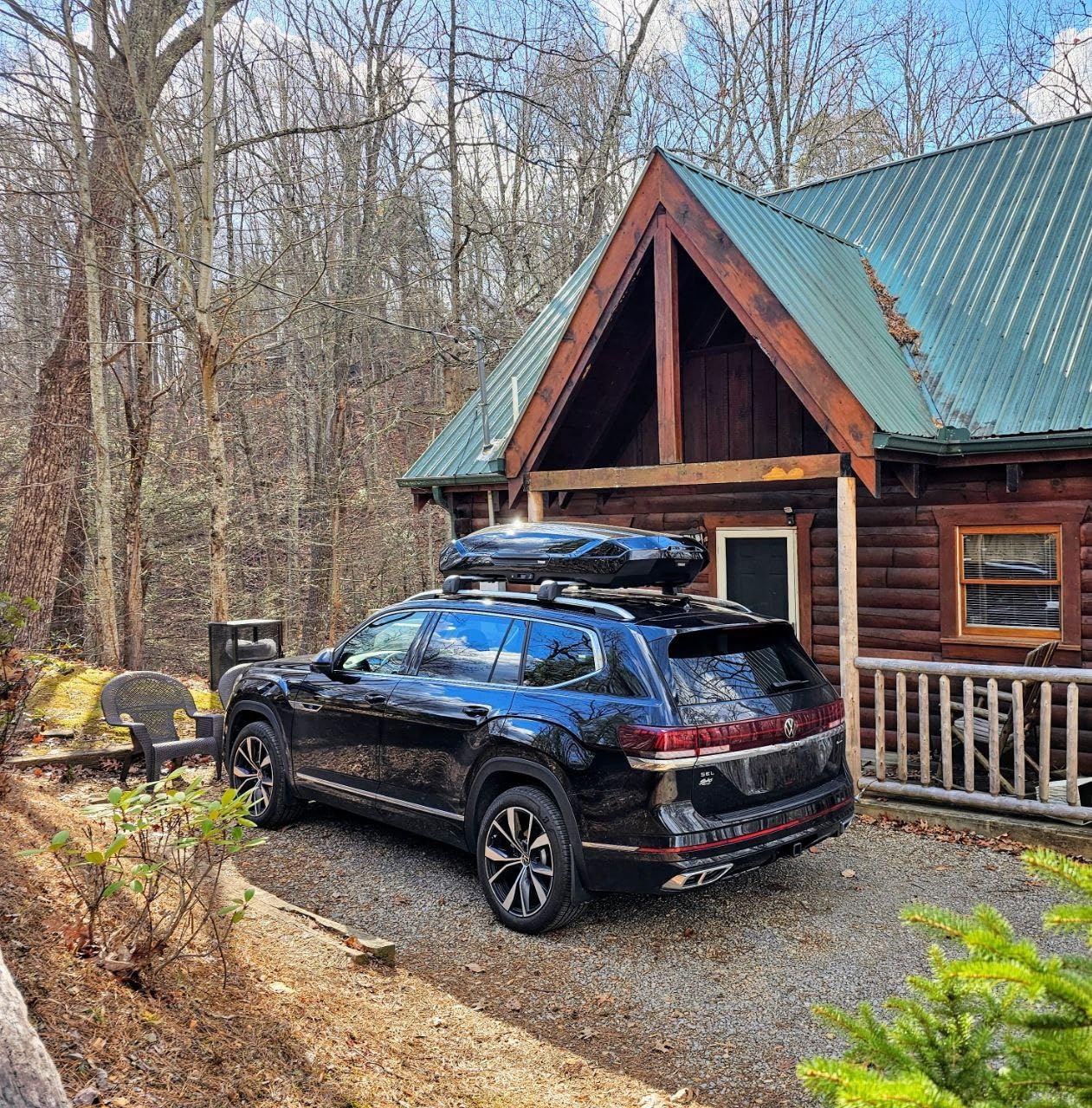
Yakima’s lineup is broad: bike racks, kayak racks, ski racks, truck racks, cargo baskets, and crossbars. The SKS Same Key System means one key handles your entire setup. Replacement parts are widely available. Customer support is responsive.
If you already own a Yakima HoldUp bike rack or a Yakima JayLow kayak mount, the SkyBox NX 18 is a no-brainer.
Thule Ecosystem
Thule’s lineup is similarly broad and arguably more polished — Thule has gone after the premium market more aggressively, and their bike racks and trailers reflect that. If you own a Thule T2 Pro XTR or any Thule rack, the Motion 3 XL slots into your existing system seamlessly.
Round 7 winner: Whichever brand you already own. If you own neither, this round is a tie.
Use-Case Recommendations
Specs and rounds are useful, but most readers want a clear answer for their specific situation.
”I’m a skier or snowboarder”
Choose the Thule Motion 3 XL. The 200 cm ski capacity vs 195 cm matters if you ski longer skis or use padded bags. SlideLock confirmation when your hands are frozen is genuinely useful. For more on winter-specific picks, see our best roof box for skis guide.
”I’m a golfer”
Choose the Thule Motion 3 XL. The slightly longer 85-inch length gives you better margins for fitting drivers and longer stand bags. Read our full best roof cargo box for golf clubs guide for the detailed breakdown.
”I take family road trips with luggage”
Either works. Pick the cheaper one when you check current prices. Both handle family duffels, suitcases, and camping gear without issue. The Yakima usually comes in a few hundred dollars cheaper, which matters more than minor hardware refinement for this use case.
”I already own Yakima gear”
Choose the Yakima SkyBox NX 18. Period. The shared SKS keys and ecosystem savings are worth more than any individual feature difference. See our full Yakima SkyBox NX 18 review for the deep dive.
”I drive a luxury SUV and care about looks”
Choose the Thule Motion 3 XL. The sculpted profile blends better with modern premium vehicles. If aesthetics rank in your top three buying criteria, this is the answer.
”I’m on a tight budget and only need a box once a year”
Choose neither. Look at the SportRack Vista XL for hard-shell value, or a waterproof soft rooftop cargo carrier for occasional use. Both Thule and Yakima premium boxes are overkill for once-a-year users.
Where to Buy
Both boxes are widely available on Amazon, with comparable pricing depending on current promotions. Always confirm you’re buying from an authorized seller — not a third-party reseller — to avoid counterfeit or wrong-item issues. One Yakima buyer specifically flagged receiving an incorrect item from a third-party seller, and the same warning applies to Thule.
- Thule Motion 3 XL: Check current price on Amazon
- Yakima SkyBox NX 18: Check current price on Amazon
Prices on premium roof cargo boxes fluctuate significantly. The Thule typically runs $50-$150 more than the Yakima at full retail, but seasonal promotions can flip that gap entirely. Check both before pulling the trigger.
Frequently Asked Questions
Is the Thule Motion 3 XL worth the extra money over the Yakima SkyBox NX 18?
For most buyers, no. The Yakima delivers 95% of the premium experience for less money. The Thule is worth the upgrade if you specifically value PowerClick mounting refinement, SlideLock automatic locking, a slightly longer ski capacity, or a more sculpted profile on a premium SUV.
Can I fit both 200 cm skis in the Yakima SkyBox NX 18?
Probably not safely. The Yakima is rated for skis up to 195 cm. Bare 200 cm skis might fit at an angle, but with bindings or a padded bag, you will exceed the usable internal length. If you ski 200 cm or longer, the Thule Motion 3 XL is the safer choice.
Which box is quieter at highway speeds?
Both are similarly quiet when properly installed. Wind noise on a roof box depends more on your vehicle shape, crossbar setup, and mounting position than on the box itself. Verified buyers of both report “surprisingly quiet” performance on large SUVs.
Are these boxes waterproof?
Both are weather-resistant for normal road use. Neither is guaranteed waterproof in every condition. For electronics, documents, and down gear, always use waterproof inner bags as a backup. For more on weatherproofing, see our waterproof rooftop cargo carrier guide.
Will these boxes fit my Honda CR-V or Subaru Outback?
The Yakima SkyBox NX 18 fits both with appropriate crossbars. The Thule Motion 3 XL fits the Subaru Outback comfortably; on the Honda CR-V, hatch clearance is tight — measure carefully and consult Thule’s fit guide for your model year.
Do I need crossbars to install either box?
Yes. Both boxes require crossbars (factory rails, aerodynamic bars, or brand-specific crossbars). Neither will mount directly to a bare roof. If your vehicle does not have crossbars, factor that cost into your budget — quality crossbars run $150-$400.
Which has better resale value?
Thule typically holds resale value slightly better in premium vehicle markets. Yakima holds value well in outdoor and ski enthusiast communities. Both are well-known brands with strong used-market demand on Facebook Marketplace and Craigslist.
Can one person install either box?
Both are listed at 53 lbs, which is technically manageable for one person — but the 84-85 inch length makes overhead lifting awkward. Two-person installation is strongly recommended, especially on tall SUVs. Have a step stool ready if you’re working on a full-size truck or large SUV.
Final Verdict
After all the rounds, the score is essentially even. Both the Thule Motion 3 XL and the Yakima SkyBox NX 18 are excellent premium roof cargo boxes that will serve you well for a decade or more.
The Thule wins on hardware refinement, ski capacity by a hair, and visual design. The Yakima wins on ecosystem value (especially if you already own Yakima gear), long-term cosmetic durability with the matte finish, and typically a few hundred dollars saved at retail.
My honest recommendation: Decide based on what you already own and what you actually plan to carry. If you’re a frequent skier with a premium SUV and no existing rack ecosystem, get the Thule. If you’re price-sensitive, already own Yakima gear, or just want the best balance of features and value, get the Yakima.
You will not regret either choice. The biggest mistake roof box buyers make is not picking the wrong premium brand — it’s measuring incorrectly, ordering the wrong size, or buying from a sketchy third-party seller. Get the basics right, and either box will outlast your current vehicle.
Still deciding which size and category fits your needs? Start with our main best roof cargo box guide for the broader comparison across price tiers and use cases.
Prices and availability are accurate as of publication. As an Amazon Associate, we earn from qualifying purchases made through links on this page. This does not affect the editorial independence of our reviews.