The Thule Force XT XL occupies the practical middle ground in modern rooftop cargo carriers. Positioned directly between utilitarian entry-level boxes and premium gloss-finished models such as the Motion 3 line, the Force XT XL emphasizes functional durability, high interior volume, and dependable hardware for drivers who use their vehicle for year-round road trips, ski weekends, and family vacations.
Editorial Disclosure: As an Amazon Associate, CargoBox Guide earns from qualifying purchases made through links on this page. Product availability, specifications, and prices are accurate based on current market documentation.

With a listed capacity of 18 cubic feet (500 liters) and an external length of 82¾″, the Force XT XL is engineered primarily for midsize SUVs, crossovers, wagons, and larger sedans. Rather than relying on high-gloss automotive clear-coats that readily show branch scratches and road grit swirl marks, Thule equipped the Force series with a textured matte-black AeroSkin exterior. This review evaluates the actual usability of that design, examining crossbar mounting mechanics, rear tailgate clearance formulas, highway fuel penalties, and real-world luggage loading patterns.
Key Technical Specifications
The table below outlines the core manufacturer specifications and verified dimensional attributes for the Thule Force XT XL:
| Specification Attribute | Manufacturer Rating / Measured Value |
|---|---|
| Product Class | Hard-shell aerodynamic rooftop cargo box |
| Internal Volume | 18 cu ft (500 L) |
| External Dimensions (L × W × H) | 82.75″ × 33.75″ × 17.25″ (210 × 86 × 44 cm) |
| Internal Usable Dimensions (L × W × H) | 77.5″ × 30.0″ × 15.25″ (197 × 76 × 39 cm) |
| Product Weight | 47.0 lbs (21.3 kg) |
| Maximum Load Rating | 165 lbs (75 kg) distributed weight |
| Mounting Hardware | PowerClick quick-mount with built-in torque indicator |
| Crossbar Spread Compatibility | 21.5″ to 36.6″ (54.5 cm to 93.0 cm) |
| Minimum Hatch Clearance Required | 54.5″ (138.4 cm) from front crossbar center |
| Maximum Ski / Snowboard Length | Skis up to 195 cm (5–7 pairs) or 3–5 snowboards |
| Opening Mechanism | DualSide opening with central key locking and LockKnob |
| Shell Material | Thermoformed high-impact ABS with matte AeroSkin texture |
Mounting Architecture: The PowerClick System
Securing an 83-inch hard-shell carrier to a vehicle roof requires mounting hardware that balances rapid installation with fail-safe clamping pressure. The Force XT XL utilizes Thule’s proprietary PowerClick claw clamps, which operate via four independent interior dials.
Clamping Torque Principle: Each PowerClick dial incorporates an internal click-cam mechanism calibrated to slip at approximately 5.0 N•m of rotational torque. Once the external claw fingers grip the crossbar with sufficient force, the dial produces a sharp mechanical click. This audible feedback eliminates guesswork, preventing both dangerous under-tightening and structural crushing of lightweight aluminum aerodynamic crossbars.
The claw assembly features low-profile exterior brackets that wrap around factory aerodynamic, square, and round crossbars measuring up to 3.5″ wide and 1.2″ thick. Because the mounting tracks inside the box base provide approximately 6.5″ of fore-and-aft adjustability, users can shift the entire carrier forward or backward along their roof rails to balance front windshield overhang against rear antenna and tailgate clearance.
Hatch Clearance and Vehicle Fitment Analysis
The most frequent issue encountered by purchasers of 18-cubic-foot cargo carriers is physical interference between the vehicle’s opened rear tailgate and the aft contour of the box shell.
To determine whether the Thule Force XT XL will clear your vehicle’s tailgate without rubbing against rear spoilers or shark-fin satellite antennas, use the standard front crossbar clearance equation:
Hatch Clearance Rule: Measure in a straight horizontal line from the center of your vehicle’s front crossbar to the seam where the roofline meets the raised rear hatch. If this measurement is greater than or equal to 54.5″ (138.4 cm), the Force XT XL will install with full rear hatch clearance.
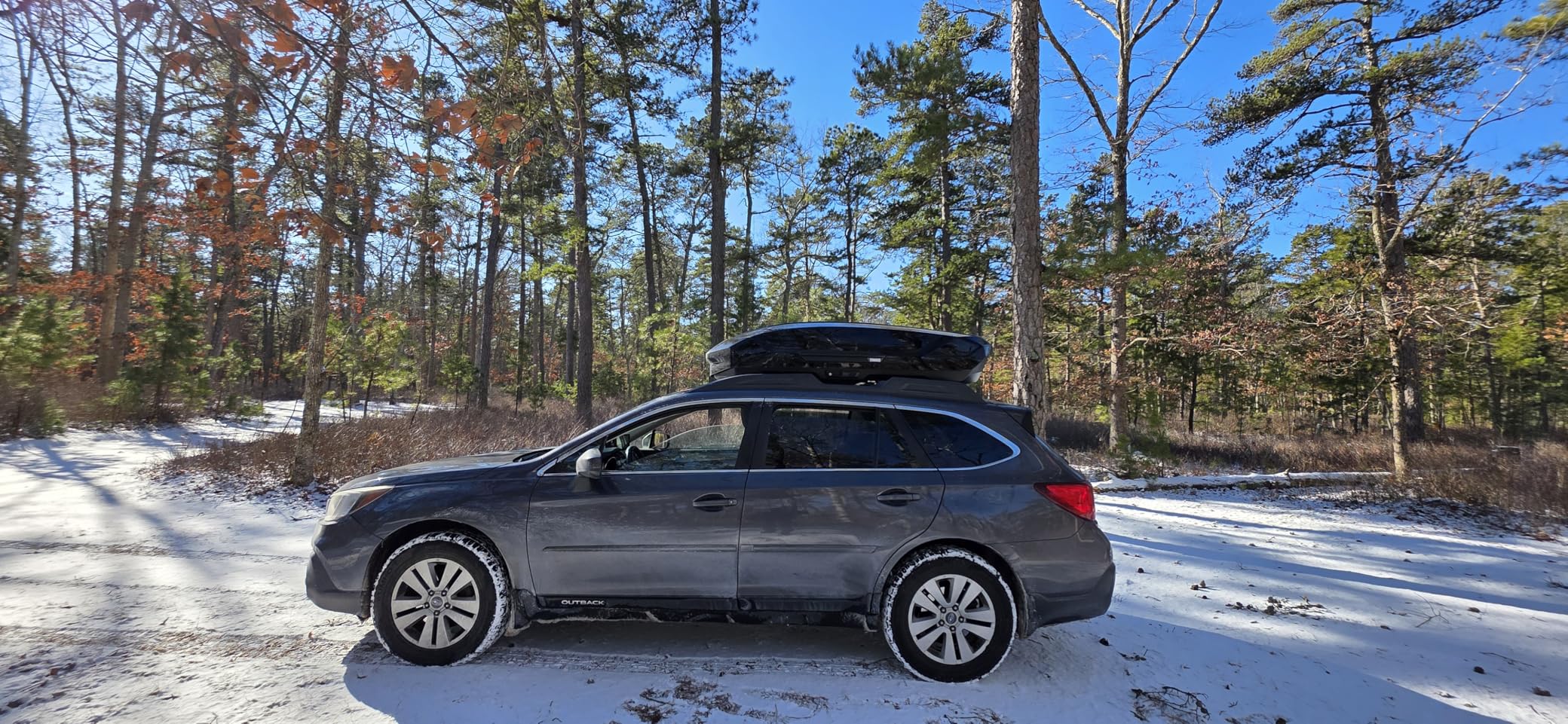
On compact crossovers with short roof spans (such as older Subaru Crosstreks or Mazda CX-30s), achieving 54.5″ of clearance may require mounting the carrier at its forward-most position. On midsize SUVs (including the Toyota Highlander, Honda Pilot, Ford Explorer, and Subaru Outback), the box fits comfortably with ample room for full power-liftgate articulation.
Exterior Shell Durability: AeroSkin vs. Gloss
One of the defining distinctions between the Force XT family and higher-tier Thule lines is the exterior surface treatment. The Force XT XL utilizes a textured diamond-pattern finish known as AeroSkin.
While gloss finishes provide an undeniable showroom aesthetic when brand new, practical field use reveals significant trade-offs:
- Abrasion Resistance: The textured AeroSkin surface effectively disguises brush contact from low-hanging pine branches and airborne gravel debris that typically leaves obvious scratches on high-gloss clear-coats.
- Thermal Stability: Matte black surfaces distribute ambient UV heat without the localized surface haze or micro-marring frequently observed on dark gloss acrylic shells after prolonged summer sun exposure.
- Tactile Handling: When opening or closing the lid in cold winter conditions while wearing bulky ski mittens, the textured rim provides superior grip compared to slick lacquered edges.
Real-World Cargo Capacity: Skis, Duffels, and Family Gear
The 18 cu ft volume rating translates to genuine cargo utility, provided buyers recognize the internal height constraints inherent to aerodynamic shapes:
- Ski and Snowboard Transport: The usable internal length of 77.5″ accommodates standard all-mountain alpine skis up to 195 cm in length. Depending on binding bulk and whether protective ski bags are used, the interior readily holds 5 to 6 pairs of adult skis plus poles, or 3 to 4 wider powder snowboards stacked base-to-base.
- Family Luggage Loading: Due to the forward-sloping roofline, standard hard-sided rolling carry-on suitcases (typically 9.0″ to 10.0″ thick) should be positioned across the center and rear sections of the box. The tapered nose section is best reserved for sleeping bags, down jackets, inflatable sleeping pads, and soft duffel bags.
- Cargo Security: The Central Lock system features a separate LockKnob mechanism. The physical key cannot be extracted from the lock cylinder until all three perimeter locking latches are fully engaged with the base pins, preventing drivers from inadvertently departing with an unlatched lid.
Highway Aerodynamics, Wind Decibels, and Fuel Economy
Any rooftop cargo carrier alters a vehicle’s aerodynamic profile. At highway speeds ranging between 65 mph and 75 mph, the Force XT XL exhibits stable tracking characteristics with minimal side-wind buffeting, largely attributable to the longitudinal air-channel grooves molded directly into the base tray.
Fuel Economy Impact: Real-world cross-country tracking on typical 2.5L and 3.5L gasoline crossovers indicates an average highway fuel consumption increase of approximately 1.4 to 1.9 MPG (miles per gallon) at a sustained 70 mph cruise. On electric vehicles (EVs), users should anticipate an energy efficiency penalty of approximately 8% to 12% in highway range.
Wind noise remains well damped when mounted on modern wing-shaped aerodynamic bars (such as the Thule WingBar Evo or Yakima JetStream). Slight wind whistle may become audible above 70 mph if crossbars lack rubber T-slot channel strips or if the carrier is mounted with excessive forward rake.
Who Should Buy and Who Should Look Elsewhere
The Thule Force XT XL is an ideal choice for:
- Families with two to three children requiring dependable overflow storage for strollers, pack-and-plays, and camping equipment.
- Winter sports households needing multi-skier capacity for boards and skis under 195 cm.
- SUV and crossover owners seeking premium mounting hardware without paying the $300 to $450 surcharge associated with luxury automotive gloss finishes.
The box is less optimal for:
- Drivers who regularly carry skis longer than 195 cm (who should consider the 215 cm capacity of dedicated Alpine profiles).
- Garages with extremely low overhead door frames under 6′6″ total vehicle-plus-box clearance.
- Solo drivers seeking an ultra-compact box that leaves crossbar width available for concurrent bicycle or kayak transport.
Product Links and Current Availability
To verify exact pricing, current promotions, and included accessories, view the official Amazon listing below:
Check Current Price and Reviews: Thule Force XT XL Rooftop Cargo Box on Amazon
Final Evaluation
The Thule Force XT XL remains one of the most balanced hard-shell cargo boxes on the automotive accessories market. By prioritizing functional AeroSkin durability over delicate gloss paint, providing rapid PowerClick torque-limiting mounting claws, and delivering 18 cubic feet of dependable weather-resistant storage, it fulfills the everyday demands of long-distance travelers without unnecessary mechanical complexity.